
Wood, MDF, particle board, or lacquer?
When choosing office furniture, not only the design but also the materials used should be considered. material type This plays a critical role in long-term performance, durability, and corporate image. In this comprehensive guide, we compare wood, MDF, particleboard, and lacquered office furniture in all aspects, and explain in detail which material is more suitable for which type of office.
- The Importance of Material Selection in Office Furniture
- Wooden Office Furniture
- MDF Office Furniture
- Chipboard Office Furniture
- Lake Office Furniture
- Technical Comparison of Materials
- Which materials are suitable for which type of office?
- Conclusion and Expert Recommendations
1. The Importance of Material Selection in Office Furniture
Corporate offices are characterized by high usage, constant movement, and long hours of active work. Therefore, the materials used in office furniture are not only aesthetically pleasing but also crucial. ergonomics, durability, ease of maintenance, and cost. It should also be evaluated from this perspective.
Choosing the wrong materials can lead to deformation, visual deterioration, and additional costs in a short time, while choosing the right materials strengthens your brand's professional image.
2. Wooden Office Furniture
Solid wood, Wood is considered the most prestigious and natural material for office furniture. Walnut, oak, and beech are frequently preferred wood types.
Advantages
- Natural and prestigious appearance.
- Long-lasting and highly durable.
- Ideal for executive offices.
Disadvantages
- High cost
- Weight and difficulty in transporting
- Sensitivity to humidity and temperature changes.
3. MDF Office Furniture
MDF (Medium Density Fiberboard), It is obtained by compressing wood fibers under high pressure. It is one of the most commonly used materials in corporate office projects.
Advantages
- Smooth surface, modern design possibilities.
- Suitable for lacquer and coating applications.
- Price-performance balance
Disadvantages
- Sensitivity to water
- Lower impact resistance compared to solid wood.
4. Chipboard Office Furniture
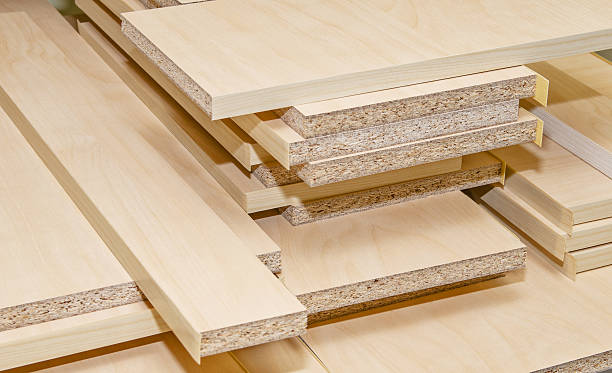
Particle board, also known as chipboard, is commonly used. economical office solutions It is preferred for this reason.
Advantages
- Low cost
- Lightweight construction
- Suitable for temporary offices.
Disadvantages
- Low load capacity
- Short lifespan
- The screw holding strength is weak.
5. Lake Office Furniture
Lacquered furniture is typically produced using a multi-layered paint and varnish process applied to MDF. It is frequently used in modern and minimalist office designs.
Advantages
- High aesthetics and glossy surface.
- Modern and corporate look
- Color variety
Disadvantages
- Scratch-sensitive surface
- Needs regular maintenance
6. Technical Comparison Table
| Material | Durability | Aesthetic | Cost | Area of Use |
|---|---|---|---|---|
| Wood | Very High | Prestigious | High | Executive Offices |
| MDF | High | Modern | Middle | Corporate Offices |
| Hardboard | Low | Standard | Low | Temporary Areas |
| Lacquer | Middle | Very High | Medium-High | Modern Offices |
7. Which Materials for Which Office Type?
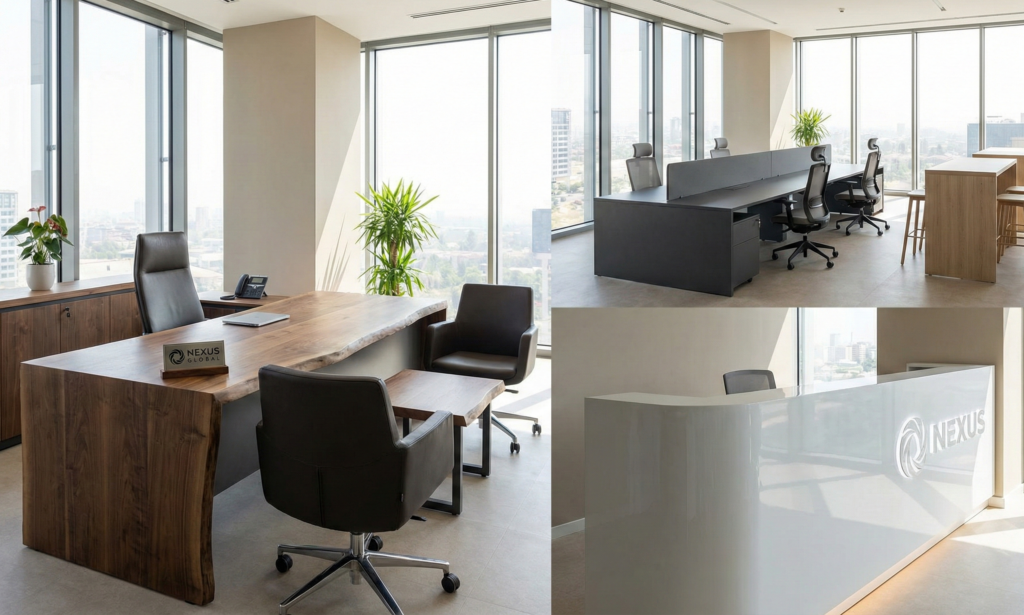
- Manager's office: Solid wood or lacquered MDF
- Open office: MDF
- Startup offices: MDF or particle board
- Showroom & prestige areas: Lacquer
CTA – Expert Advice
Choosing office furniture is a long-term investment. Not only price, but also usage intensity and brand perception should be considered.
8. Conclusion
When choosing between wooden, MDF, particleboard, and lacquered office furniture, the size of your office, its intended use, and your corporate goals should be the determining factors. Selecting the right materials will both improve employee satisfaction and enhance your brand image.