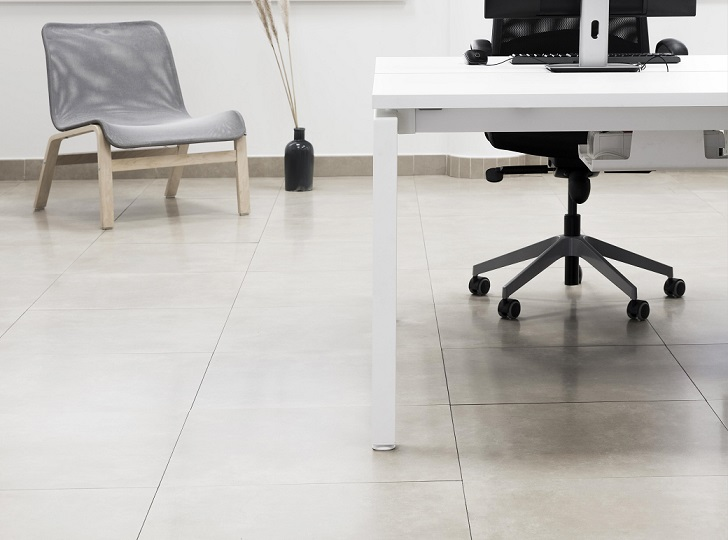



Choosing office furniture isn't just a matter of aesthetics; it's also about ergonomics, efficiency, and durability. Below, you'll find short but informative answers to 25 of the most frequently asked technical questions.
1. Office chairWhat kind of back support should it have?
It should fill the lumbar gap, support the natural "S" curve of the spine, and be height-adjustable.
2. Office deskHow much foot space should there be?
Minimum legroom under the table. 60 cm depth, 70 cm height This is necessary; otherwise, knee and leg impingement will occur.
3. Which is better: a mesh-backed chair or a fabric-covered one?
Mesh seats are breathable and prevent sweating during long periods of sitting; fabric seats, on the other hand, feel softer and warmer.
4. What should the depth of a work desk be?
Average 70–80 cm The depth is ideal. The distance between the monitor and the eyes should be 60–70 cm.
5. What are the advantages of using a height-adjustable desk?
It allows for standing work, improves blood circulation, and reduces the risk of back pain.
6. How can you tell the quality of a sliding door or shock absorber?
Products that open and close silently, operate smoothly, and have a slow-closing system incorporate high-quality mechanisms.
7. How should cable management be done on modular desks?
Under the table cable duct or flip-top cover power strip module It should be added. Messy cables create problems both aesthetically and in terms of safety.
8. Do partition panels provide sound insulation?
Yes, acoustic fabric-covered panels It provides sound absorption. This feature is limited in MDF or glass panels.
9. L-shaped desk or straight desk for a small office?
L-shaped tables make efficient use of corner space but can restrict movement in tight spaces; compact tables are more suitable.
10. Office furnitureHow can workmanship defects be identified?
If the cover alignments are uneven, the hinges are loose, or there are bulges or burrs on the surfaces, the workmanship quality is poor.
11. What abrasion resistance rating should be considered when choosing fabric?
In fabrics Martindale test its value is at least 40,000 cycles It should be; this is sufficient for professional use.
12. What should the height of the coffee table be?
The height of the seat should be the same as or 2–3 cm lower than the seat height (average 40–45 cm).
13. How to hide an electrical outlet on a meeting table?
Secret flip-top, pop-up socket or under-desk power outlet system should be preferred.
14. How is furniture load-bearing capacity measured?
It is stated on the product label or in the catalog. Standard table minimum. 50 kg, cabinets 70–100 kg It must have the carrying capacity.
15. What is the difference between different types of coatings?
-
Melamine: Affordable and scratch-resistant.
-
Laminate: Thicker and more durable.
-
Lacquer: Bright, aesthetically pleasing, yet delicate.
-
Varnish: It preserves the wood grain and provides a natural look.
16. Office furnitureIs fire safety important?
Yes. Flame retardant fabrics and E1 class low formaldehyde materials. should be used.
17. How should the armrests be adjusted?
The armrest should be positioned at a 90° angle to the elbow; it should be adjustable in terms of forward, backward, and height.
18. How can you tell the quality of a fastener?
Stainless steel or galvanized screws should be used, and the connection points should not wobble.
19. How does office lighting affect furniture placement?
Direct light reflections cause glare on the screen. Tables should receive light from the side, not from behind.
20. How can resilience be ensured in multi-user offices?
Metal construction, thick tabletop (at least 25 mm), and easy-to-clean surfaces should be preferred.
21. How to balance ergonomics and aesthetics?
Functionality should be the priority; however, form and colors should be chosen to be consistent with the brand identity.
22. What should the thickness of the metal profile be?
Minimum on office desks 1.2 mm, in heavy-duty systems 2 mm A profile should be used.
23. What should the lid opening distance be?
At least in front of the lid or drawer 60 cm free space It should be abandoned.
24. What is an example of a compact design?
Foldable meeting tables, seating units with integrated storage or multi-purpose cabinet-shelf systems.
25. How to extend the lifespan of furniture in a humid environment?
With PVC edge banding, moisture-resistant particle board (E1 class) and stainless steel fasteners should be preferred.
TRUE office furnitureChoosing it is not just a decorative preference; Employee health, space efficiency, and a long-lasting investment. It means...
Small technical details can make a difference for years to come — whether you buy a single desk or renovate the entire office.