


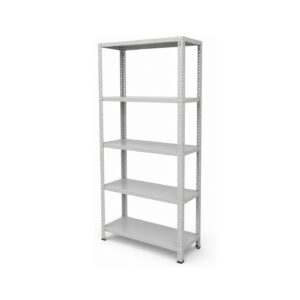










Construction Site & Container Office Furniture
The first structure built on a construction site is often the heart of the field: the container office used daily by the project manager, site chief, technical office, and hundreds of personnel. These areas may seem temporary, but they remain active for six months to five years; furniture must not wear out quickly under dust, humidity, temperature differences, and heavy use. Kavela workshop, based in Ankara Çankaya, produces durable, economical, and fast-delivered construction site office furniture solutions focused precisely on this need of contracting and construction companies.
In container and prefabricated office furniture, the priority is not aesthetics; it is durability, resistance to heavy use, and completing the setup without inflating the budget. Standard home/office furniture typically falls apart within a few months under construction site conditions. The right specifications — laminate thickness, edge bands, metal leg structure, locking mechanism — provide a solution with a single supply throughout the construction period.
In this guide, we cover all equipment items from the administrative areas of the construction site and container office to worker and personnel areas, the balance of durability and cost, criteria for fast delivery and portability, and Kavela’s custom-made production approach.
What is a Construction Site & Container Office, Needs Analysis
A construction site office is a temporary workspace, usually consisting of a container or prefabricated panel structure, where administrative and technical work is carried out on the construction site. It scales from a single 2.5×6 meter container to two-story complex offices combining dozens of modules. Furniture equipment is determined more by the team structure on site than by the size of the building.
Questions to Ask in Needs Analysis
To create the correct equipment list, a few basic questions need to be clarified at the beginning of the project:
- How many administrative staff are there? The project manager, site chief, technical office (structural/architectural), site engineers, subcontractor representatives, and secretariat require separate workstations.
- What is the number of field personnel? The number of changing lockers and coat racks, and the capacity of cafeteria tables and benches, directly depend on the number of workers.
- How long is the project duration? A 6-month renovation and a 4-year urban transformation project require different durability classes.
- Will the furniture be moved after the project? For equipment that will be disassembled and moved to another construction site, a demountable structure is a priority.
This analysis prevents unnecessary spending. Most companies buy either too much or too little equipment; accurate needs assessment optimizes both budget and delivery time. Kavela’s interior architect and project team create an item-by-item equipment list based on your container layout plan.
Administrative Area Furniture: Desk, Chair, Cabinet, Meeting
The administrative area is where the decision-making mechanism of the construction site operates. Personnel sit here for 8-10 hours a day; therefore, semi-ergonomic and durable office furniture, not home-type furniture, should be preferred.
Work Desks
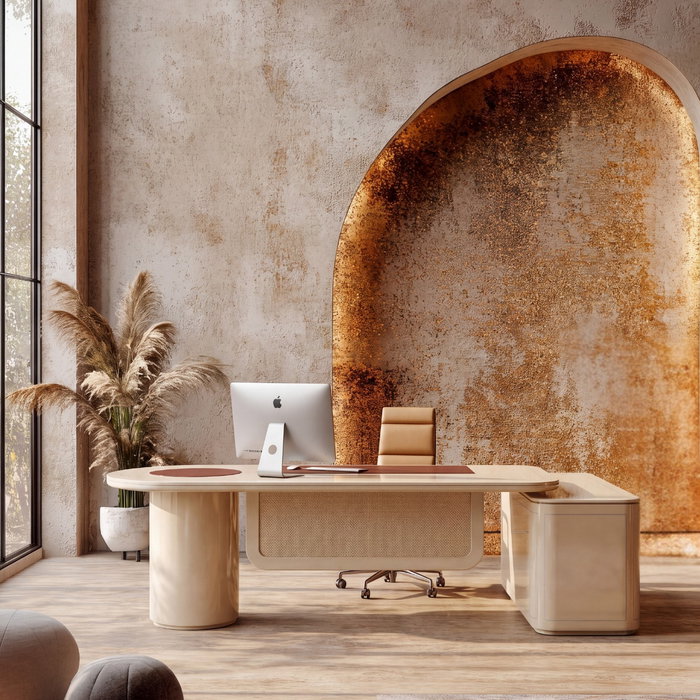
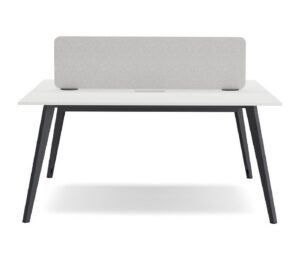
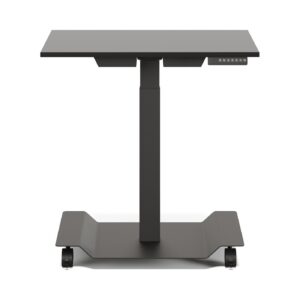
The ideal work desk for a construction site is a combination of an 18 mm thick melamine (particleboard) tabletop, 2 mm PVC edge band, and metal fixed legs. Since container depth is limited, 120×60 or 140×70 cm desks are the most efficient sizes. For the technical office where project drawings will be opened, wider, L-shaped desks or desks with additional work surfaces can be planned. Kavela’s work desks category includes options suitable for construction site intensity.
Work Chairs
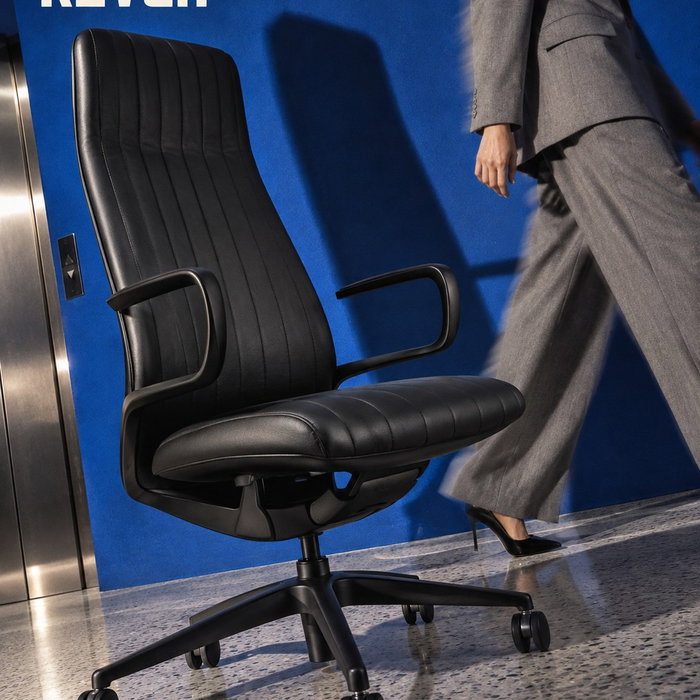
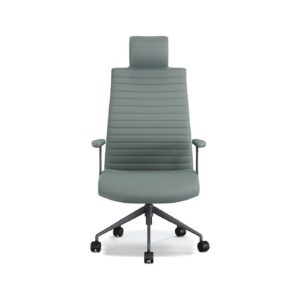
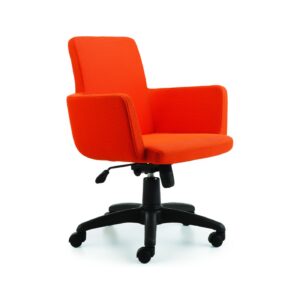
In the administrative area where long hours are spent, the lumbar support and mechanism of the work chair are important; however, on a construction site, mid-range chairs with mesh backs and washable fabric are more sensible than expensive leather executive chairs. Surfaces that are easy to clean in dusty environments are preferred. Models with a good durability-price balance can be selected from work chairs.
Cabinets, Pedestals, and Document Storage
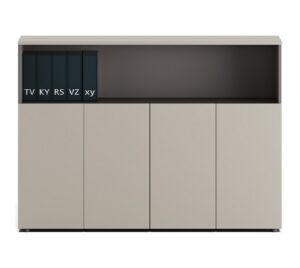
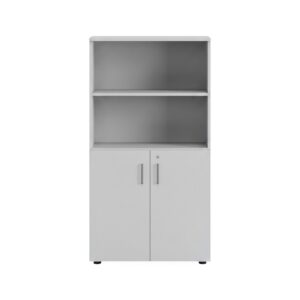
Document flow is intense on a construction site: progress payment files, projects, permits, and occupational safety documents are constantly exchanged. Lockable pedestals (desk-integrated drawer towers) and tall cabinets are necessary for document security. Keeping sensitive documents locked on site is important for both order and security. Cabinets and the extensive storage category organize the office archive with wood and metal options.
Meeting Area
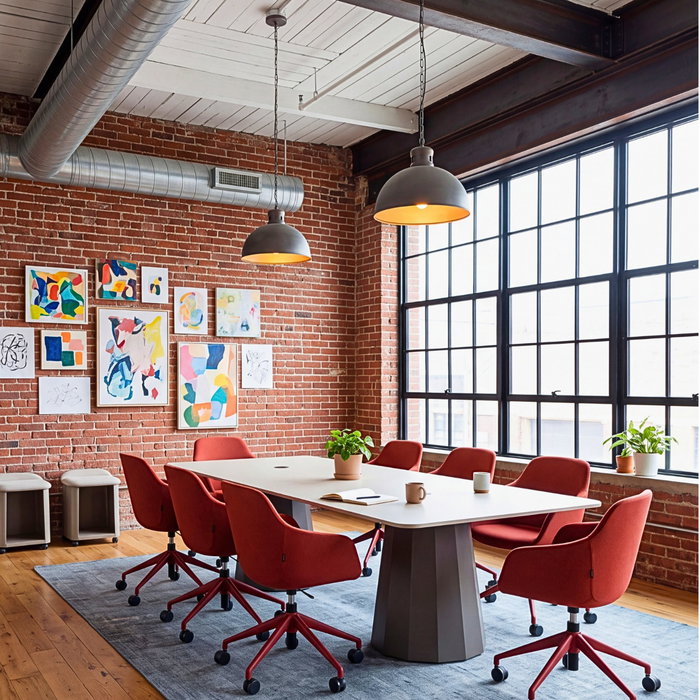
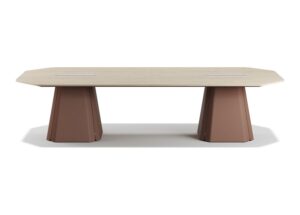
A meeting table is necessary on almost every construction site for subcontractor coordination, work schedule reviews, and consultant meetings. A compact meeting table for 6-8 people can be positioned at one end of the administrative container. For flexibility, folding or modular connectable tables can be preferred.
Worker and Personnel Areas: Cafeteria, Changing Room, Rest Area
The areas used by field personnel are subject to much more intense and harsh use than the administrative area. Since they are used in work clothes, sometimes in muddy or sweaty conditions, this furniture must be resistant to impact, moisture, and abrasion. Additionally, Occupational Health and Safety regulations mandate the provision of changing rooms, rest areas, and dining areas for certain numbers of workers.
Cafeteria Tables and Seating
The construction site cafeteria sees high turnover in a short time; dozens of people sit at the same time during lunch break. Therefore, cafeteria tables with easy-to-clean melamine or compact laminate tops and metal legs are ideal. Bench-type (row) seating fits more people in the same space than chairs and has a low risk of tipping over. Easy-to-clean, water-repellent surfaces are important for hygiene.
Changing Lockers and Coat Racks
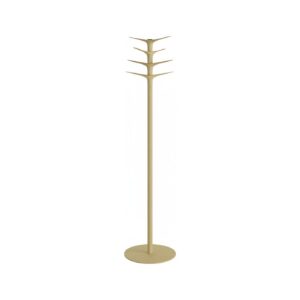
Changing lockers are the most critical item in worker areas. Personnel need personal lockers to separate work clothes from daily clothes and to keep valuables locked. The most suitable solution for a construction site is metal changing lockers with epoxy/electrostatic paint that are resistant to rust in humid environments; doors with ventilation holes reduce mold and odor formation. Lockers are typically configured in 1, 2, 4, or 6 compartment cabinet structures. In areas where fewer personnel leave temporary items, coat rack units with hangers are sufficient. Kavela produces metal changing lockers and wooden coat rack solutions specifically for the field within the scope of storage.
Rest Area
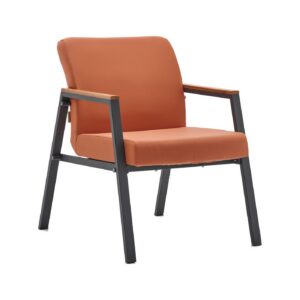
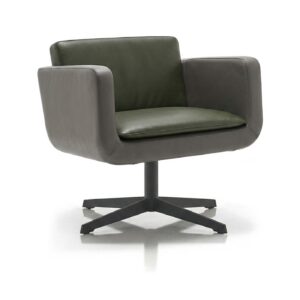
In break areas, simple sofas and waiting chairs covered with washable fabric or faux leather are used. Here too, the priority is durability and cleanability; expensive upholstered products wear out quickly.
Durable Chairs and Stools
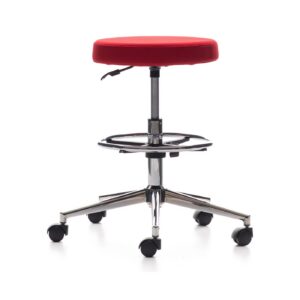
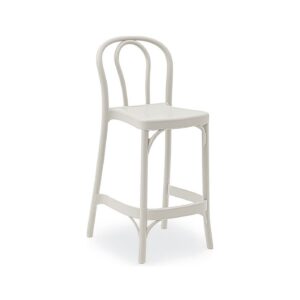
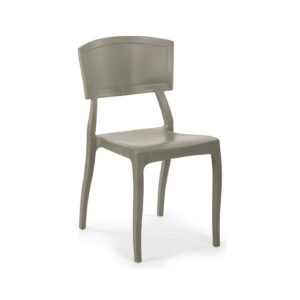
The item that suffers the most damage, both in the cafeteria and in intermediate areas, is the chair. For construction sites, polypropylene (one-piece plastic) or metal chrome-plated, stackable chairs are the most economical and durable choice; they are cheap to replace when broken and take up little space when stacked. Stools are used for standing work at counters and measuring tables. For all options, you can browse the chairs category.
Durability and Economy: Dust, Humidity, Heavy Use
The most common mistake in selecting construction site furniture is expecting the same standards as normal office products. Field conditions are completely different, and furniture specifications must be determined accordingly.
Dust and Humidity Resistance
Construction dust penetrates every surface; it gets into mechanisms and locks sliding rails. Therefore, furniture with simple, fewer moving parts has a longer life on the construction site. Humidity is especially high during excavation and rough construction phases. Instead of MDF, particleboard tabletops with better moisture resistance and painted metal components against rust should be preferred. Bare wood surfaces swell; laminate and melamine-coated surfaces are impermeable to moisture.
Resistance to Heavy Use
While an office chair is used by 1 person per day, a chair in the construction site cafeteria is used by 3-4 different people during the day. The same logic applies to desks, cabinets, and door hinges. Therefore, heavy-duty (contract/project grade) hardware is preferred; home-type products deteriorate quickly at this pace.
Economy and Total Cost of Ownership
The cheapest furniture often turns out to be the most expensive because it needs to be replaced in the middle of the project. The right approach is to evaluate the initial purchase price together with the durability throughout the project. High-quality but unpretentiously specified equipment is more economical when purchased once and lasts until the end of the project. When planning the construction site equipment budget, the real cost of setting up an office from scratch guide provides an item-by-item idea.
Fast Delivery, Assembly, and Portability
On a construction site, time is money. The organization on site cannot begin before the administrative office is set up; therefore, furniture delivery time directly affects the start of the project.
Fast Delivery
Since Kavela manufactures in its own workshop, it provides fast delivery for standard construction site equipment items. Once the container layout plan is finalized, preparing desks, cabinets, changing lockers, and seating groups as a package and delivering them to the site in a single shipment is much more practical than piecemeal supply.
Assembly
Installing products that come disassembled on site requires time and labor. Kavela’s assembly team comes to the site and installs the equipment; thus, the construction site can allocate its own team to its main work. Changing locker fixing, desk-pedestal assembly, and meeting area placement are completed professionally.
Portability and Reuse
When a construction site is finished, most of the equipment does not become scrap; if chosen correctly, it can be disassembled and moved to the next project. Demountable structure, stackable chairs, and modular cabinets are valuable in this respect. If planning is needed when moving furniture between construction sites, the office moving and transportation prices guide provides cost estimation. This approach creates an investment spread across multiple projects rather than an expense that ends with a single project.
Custom-Made Production and Project Support
The biggest constraint of container offices is limited space. Standard furniture is often either too large or uses spaces inefficiently. Custom-made production at Kavela’s workshop turns this very constraint into an advantage.
Production According to Container Space
In a container 2.5 meters wide, every centimeter is valuable. Solutions such as desk depth fitting under a window, a tall cabinet fitting behind a door, or an L-shaped desk utilizing a corner are only possible with custom-made production. Kavela produces countertops, shelves, and storage units according to your container dimensions.
Project and Interior Architect Support
Kavela’s interior architect and project team manage the process from the layout plan to the equipment list. For large construction sites with many containers, single-source planning provides both integrity and cost control. You can find detailed information about this service on the custom-made furniture page.
All Equipment from a Single Supplier
With 5 brands and over 340 products, Kavela meets all furniture needs of the construction site, from administrative desks to changing lockers, from meeting tables to cafeteria seating, from a single source. A single supplier both facilitates coordination and ties delivery and assembly to a single schedule. For corporate projects in Ankara, the Ankara office furniture page also serves as a reference.
Working with Kavela
Kavela, with its showroom and workshop in Ankara Çankaya, offers end-to-end service to contracting and construction companies for construction site and container office equipment. The process is simple: you share your container layout plan and team structure, the Kavela team prepares a quote with an item-by-item equipment list, custom-made production begins after approval, and the equipment is delivered to the site and assembled.
We are ready to discuss your project for durable, economical, and fast-delivered construction site office furniture. Send us your container dimensions and personnel count, and we will create the most suitable equipment plan for you — contact us via WhatsApp or get a quote now. If you would like to see the products in person at the Çankaya showroom, we can evaluate our custom-made and standard collections together.
Frequently Asked Questions
How long does it take to deliver construction site office furniture?
For standard items (desks, cabinets, seating), delivery time is short because Kavela manufactures in its own workshop. For custom-made and large quantity projects, the timeline is clarified based on the layout plan and quantities; a concrete delivery schedule is shared during the quotation phase.
What desk sizes are suitable for a container office?
Since container width is limited, 120×60 and 140×70 cm desks are the most efficient sizes. For the technical office, L-shaped or large drawing desks, and special sizes utilizing corners can be prepared with custom-made production.
Should changing lockers be metal or wood?
In areas used intensively and in humid conditions by field personnel, electrostatically painted metal changing lockers with ventilation holes are recommended; they are more resistant to rust and impact. Wooden coat rack units can also be preferred in low-use administrative areas.
Can I move the furniture to another project when the construction site is finished?
Yes. Desks and cabinets produced in a demountable structure, and stackable chairs can be disassembled and moved to the next construction site. This approach transforms the equipment from an expense that ends with a single project into an investment spread across multiple projects.
Can I get all construction site equipment from one place?
Yes. With 5 brands and over 340 products, Kavela meets all furniture needs of the construction site, from administrative desks to changing lockers, from meeting tables to cafeteria seating, from a single supplier; delivery and assembly are tied to a single schedule.
Do you provide assembly service for the construction site?
Yes. Kavela’s assembly team comes to the site and installs the equipment; changing locker fixing, desk-pedestal assembly, and placement are completed professionally, allowing the construction site to allocate its own team to its main work.
Sources
- Republic of Turkey Ministry of Labor and Social Security — Occupational Health and Safety legislation (obligations for changing rooms, rest areas, and dining areas)
- Occupational Health and Safety Regulation in Construction Works — requirements for construction site social facilities and administrative areas
- TSE — furniture durability and surface resistance standards (melamine/laminate surface, metal components)
- Kavela Furniture workshop and project experience — construction site/container office equipment applications
Latest posts
@kavelafurniture