





Stools
No products in this category yet.
What a backless stool is actually for
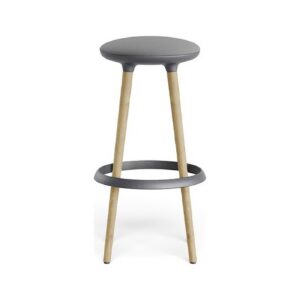
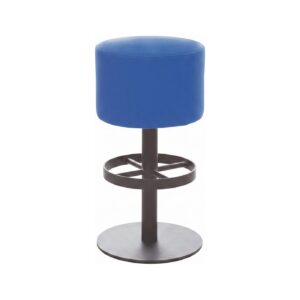
A stool is not a cheaper chair — it is a different seating decision. Without a backrest the sitter carries weight through the feet and pelvis rather than the spine, so occupancy is short and the rate of standing up and sitting down is high. Workshop benches, salon units, laboratories, reception back-offices and cafe counters all fit that description. Three stools are listed in this category: Cartello, Champinon and Tabura. C-Stool and Clark answer the same brief but are listed on the Premium line rather than in this grid. If you need high seating with a backrest, this is not the right group — bar chairs are listed separately.
Read more Show less
The models, measured individually
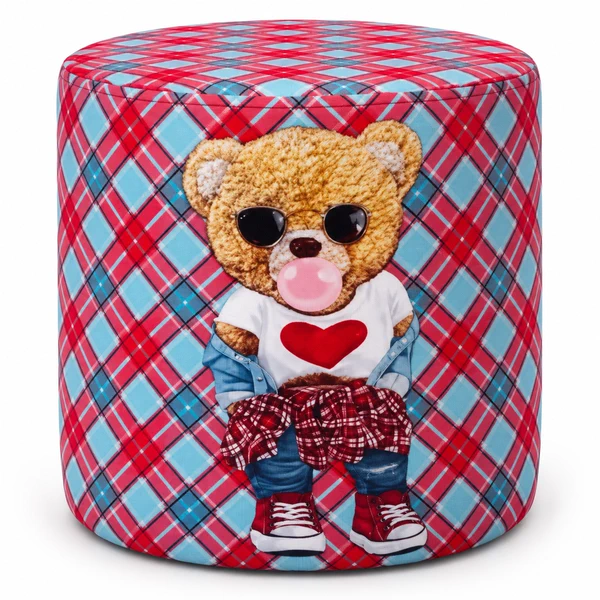
Rather than quoting an average, it is more useful to read each model on its own figures. Champinon is listed at Ø35 H62 cm, a low cylindrical form that takes almost no floor area and works as casual or occasional seating. Cartello is listed at Ø40 H77 cm; its circular top means it can be turned in a narrow aisle without catching. C-Stool is listed at 85x85x76 cm overall with a 43 cm seat height. Clark is listed at 90x88x78 cm with a 44 cm seat height. Tabura carries a 44 cm seat height in its product data but no overall height figure, so no number is quoted here for it.
Seat build and adjustable bases
Base type matters more on a stool than on a chair, because there is no backrest to share the load and stability depends entirely on the base. Tabura is offered in three base configurations: a plastic star base with castors and a black gas lift, a chrome conical star base with castors and a chrome gas lift, and an aluminium base with castors and a chrome gas lift. Its product data specifies the seat as plywood with polyurethane, the mechanism as an up-down system, and the base as a wheeled aluminium corner base with a ring. A gas lift is worth paying for wherever one unit is shared across shifts by people of different heights. Where a single fixed height is sufficient, Cartello and Champinon need less maintenance over time.
Choosing a stool for a project
Seat surface determines how long a stool can be used comfortably. Clark’s wooden slat seat is defined for residential, hospitality and catering environments, and a slatted surface does not hold liquid on top — a practical advantage in food and beverage areas. C-Stool is positioned differently again: it is described as a stool that actively trains the body to seek the correct posture. In multi-unit purchases, standardising on one seat surface across the order simplifies both cleaning procedure and future replacement. Compact cylindrical forms are more forgiving on installation: Champinon and Cartello present the same silhouette from every angle, so no alignment is needed when they are placed in a row.
Stools are one of the two subcategories under Side Chairs; the other, and the closest neighbour, is bar chairs. In cafe, restaurant and hotel projects plan stools alongside the seating in Horeca, and match them to the high tops listed under cafe and bar tables and the wider tables category. If the unit will be occupied for a full working day, choose a mechanism-equipped seat from task chairs instead.
Frequently Asked Questions
What's the main difference between a bar stool and a counter stool?
The primary distinction is height. Counter stools typically measure 24-27 inches, ideal for standard kitchen counters (35-37 inches). Bar stools are taller, usually 28-33 inches, designed for higher bar areas (41-43 inches). At Kavela Furniture, we offer a diverse range, like the Fleme Multi-Purpose Stool, ensuring you find the perfect fit for your space. Visit our Çankaya showroom at Üsküp Caddesi No:41/A to explore options.
How do I choose the right stool for my kitchen island or home bar?
Consider the height of your counter or bar, the desired comfort level (with or without backrests), and your existing decor. Measure carefully, leaving about 10-12 inches between the stool seat and the countertop. Kavela Furniture provides diverse styles, from the minimalist C-Stool to more robust designs. Our experts at our Çankaya showroom, open Mon-Sat 10:00-19:00, can guide your selection for optimal aesthetics and functionality.
Are stools comfortable for extended use, especially without a backrest?
While some stools, like our Tabura Stool, are designed for quick seating, many modern stools prioritize ergonomics. Features like contoured seats, footrests, and even swivel functions enhance comfort. For prolonged sitting, consider stools with backrests, such as our Icho or Prop models, which offer proper back support. All Kavela Furniture products come with a 2-year warranty, reflecting our commitment to quality and comfort in every piece.
What materials are most durable and stylish for stools?
Durability and style depend on your usage and aesthetic preferences. Wood offers classic warmth, metal provides a modern industrial look, and upholstered stools add comfort and texture. Many Kavela Furniture stools, including the Clark Stool, combine robust frames with quality finishes for longevity. We also offer made-to-measure production, allowing you to perfectly match materials and designs for your specific project needs.
Can stools be versatile enough for different rooms or purposes?
Absolutely! Stools are incredibly versatile. A compact stool can serve as extra seating in a living room, a convenient bedside table, or even a stylish plant stand. Our Fleme Multi-Purpose Stool, for example, is designed for adaptability across various settings, from kitchens to home offices. Kavela Furniture focuses on creating functional and stylish pieces that enhance any environment, offering project-based delivery for larger needs.
Latest posts
@kavelafurniture