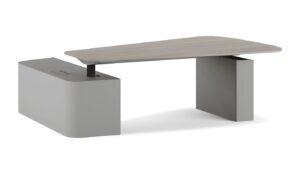
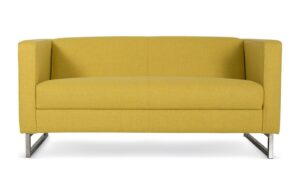
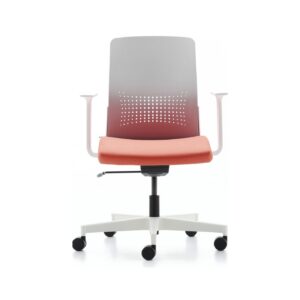
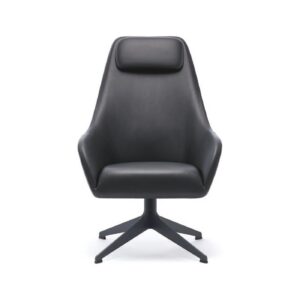









 Timy
Filing cabinet
Timy
Filing cabinet
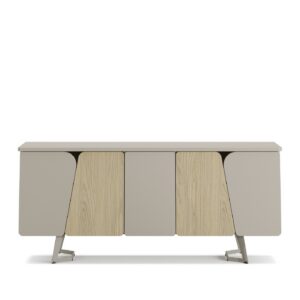
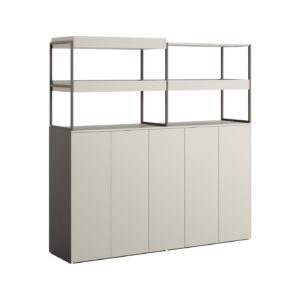
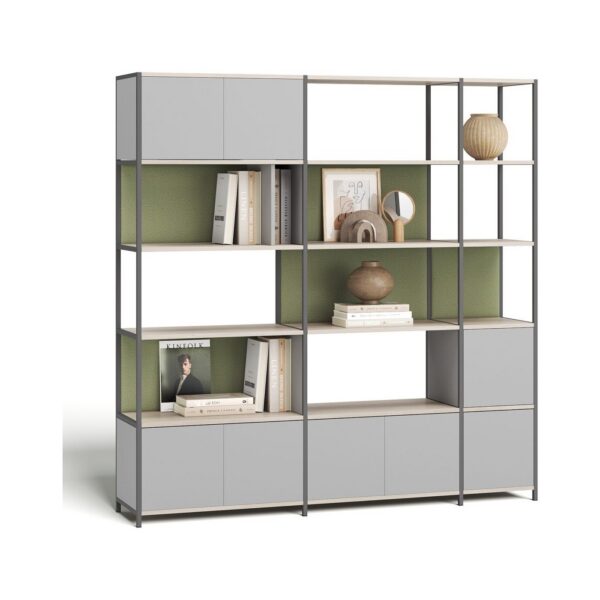
Primary recommendation for modular storage: five module heights between a 10 cm shelf and a 197 cm cabinet, 40 cm deep, 36-394 cm wide. Extended within the same system as volume grows.
Categories
Highlights
Highlights
Highlights
Highlights
You can search by feature too
The distinction between a filing cabinet, a modular cabinet and archive racking is determined by three questions: what is stored, is locking required, and will the volume grow.
Storage is selected on the basis of three questions. What is stored: paper folders are heavy and limit shelf spans, personal items require locking, and materials and samples require depth. Is locking required: personal data and contracts make a lockable door mandatory. Will the volume grow: where growth is expected, a modular system is specified, since modules can be added to the same body later, which a closed cabinet does not allow.
| Requirement | Type | Size | In the catalogue |
|---|---|---|---|
| Visible wall, mixed use | Modular melamine cabinet | Height 83-197 cm | Timy · Silver |
| Paper archive, locking required | Steel filing cabinet | Two doors, adjustable shelves | Steel filing cabinet · large filing cabinet |
| Store room, high volume | Open metal shelving | 31-93 cm deep, 200 cm high | Metal open shelving · steel archive racking |
| Under desk, daily access | Pedestal | 40x45-55 cm | Sydney pedestal · Tin |
| Personal items, shared area | Locker | By number of compartments | Lockers · Layer |
Dimensions are the products’ own production sizes; the full set of module options is listed on each product page.
Timy
Filing cabinet
Primary recommendation for modular storage: five module heights between a 10 cm shelf and a 197 cm cabinet, 40 cm deep, 36-394 cm wide. Extended within the same system as volume grows.
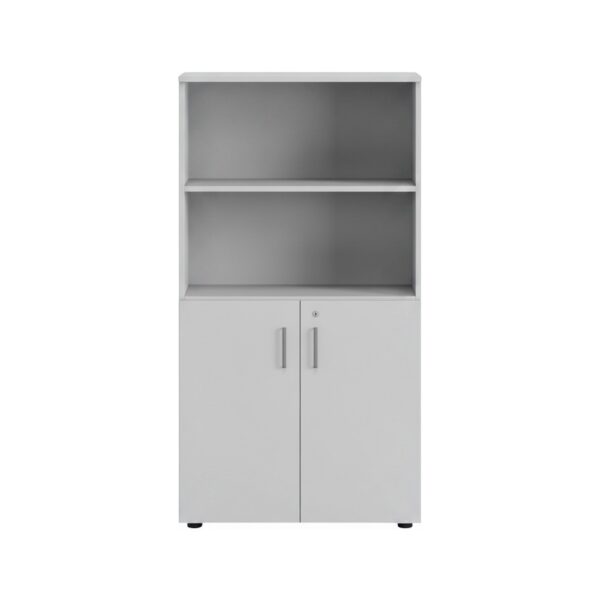 Silver
Cabinet · Pedestal · Console
Silver
Cabinet · Pedestal · Console
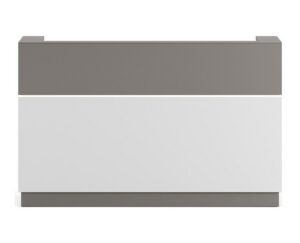
Half-open, half-closed shelving system: ten cabinet sizes between 40x38x75 and 80x47x186 cm, two pedestals and a 160 cm console.
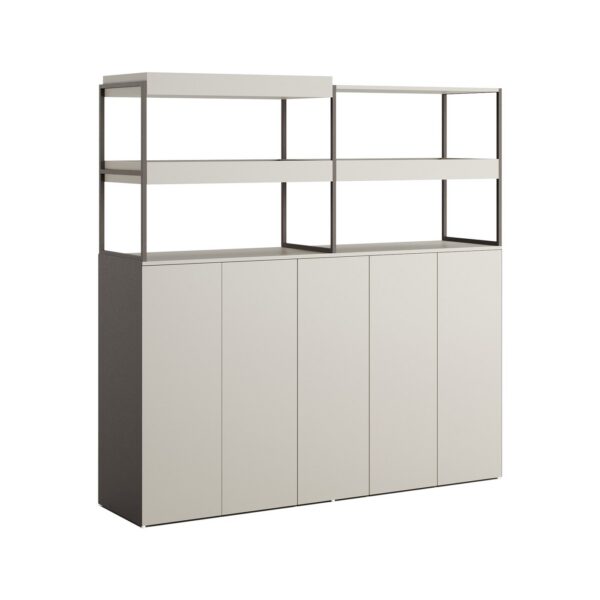 Tin
Cabinet · Pedestal · Console
Tin
Cabinet · Pedestal · Console
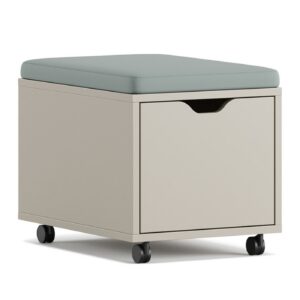
Drawer pedestal range up to 40x45x110 cm, providing access to documents and personal items without leaving the desk.
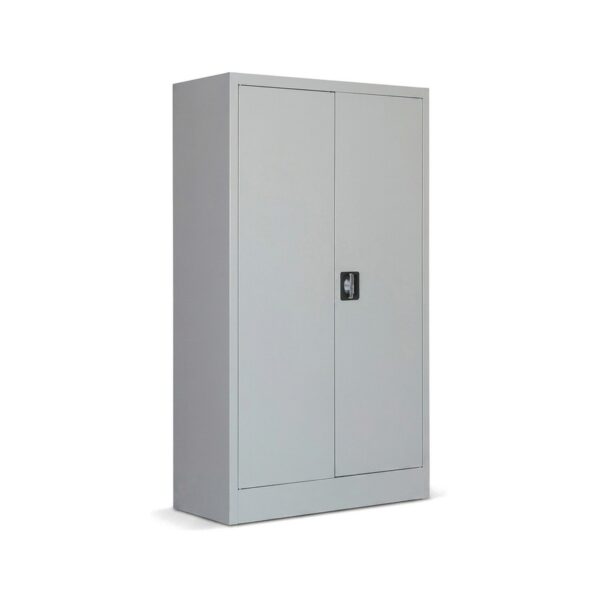 Steel Filing Cabinet
Steel cabinet
Steel Filing Cabinet
Steel cabinet
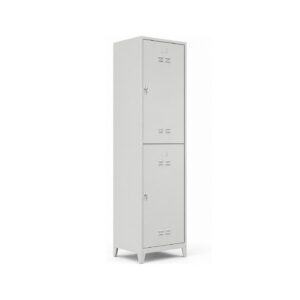
Two-door lockable steel body, the standard unit for institutional archives.
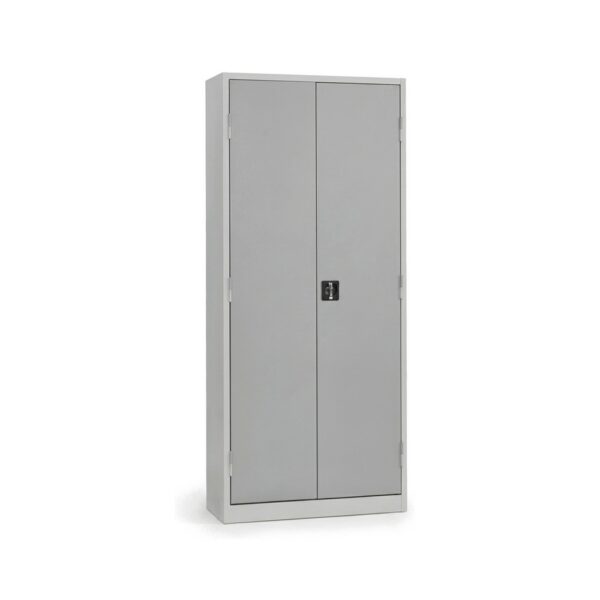 Large Filing Cabinet
Steel cabinet
Large Filing Cabinet
Steel cabinet
Large steel cabinet with adjustable shelves; a change in folder height moves the shelf rather than the cabinet.
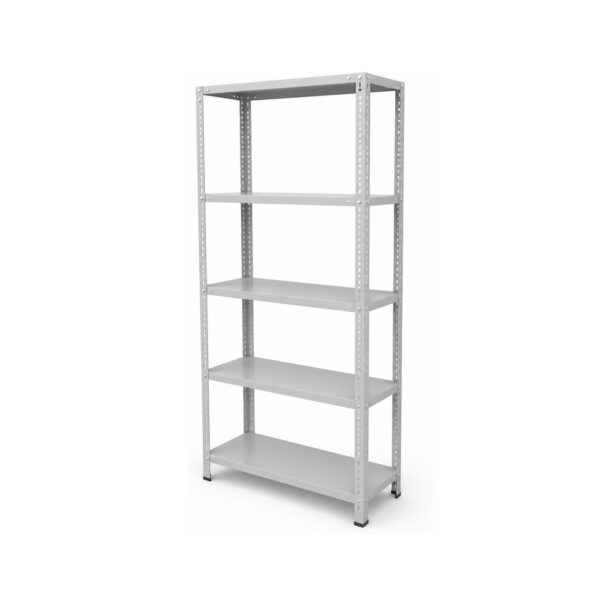 Metal Open Shelving, Narrow Depth
Metal shelving
Metal Open Shelving, Narrow Depth
Metal shelving
Open shelving with five steel shelves on slotted angle uprights, 93x31x200 cm; the most economical solution for store and archive rooms.
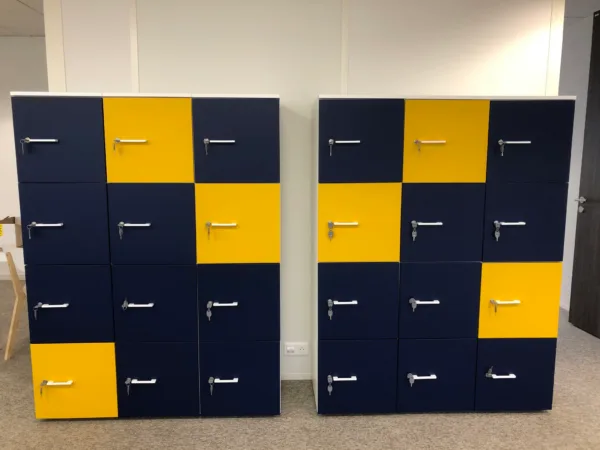 Lockers
Storage unit
Lockers
Storage unit
Personal storage at office and public entrances, for organisations moving to shared desking.
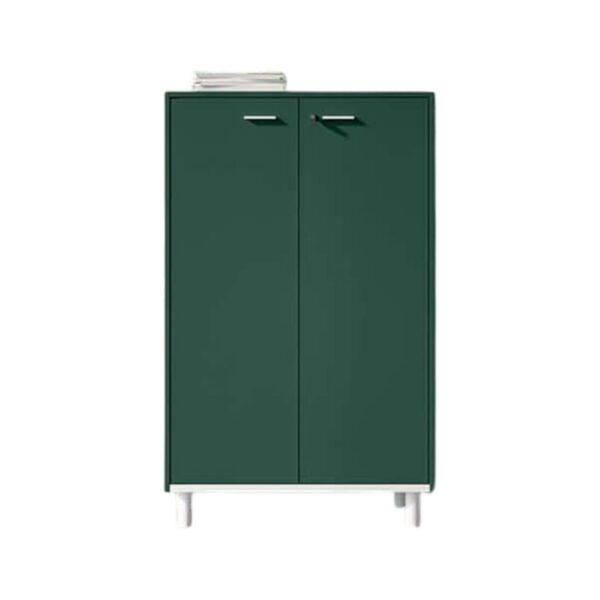 Storage
 unit
Storage
Storage unit
Hinged or sliding door options; in a narrow corridor the sliding version does not obstruct the passage in front of the cabinet.
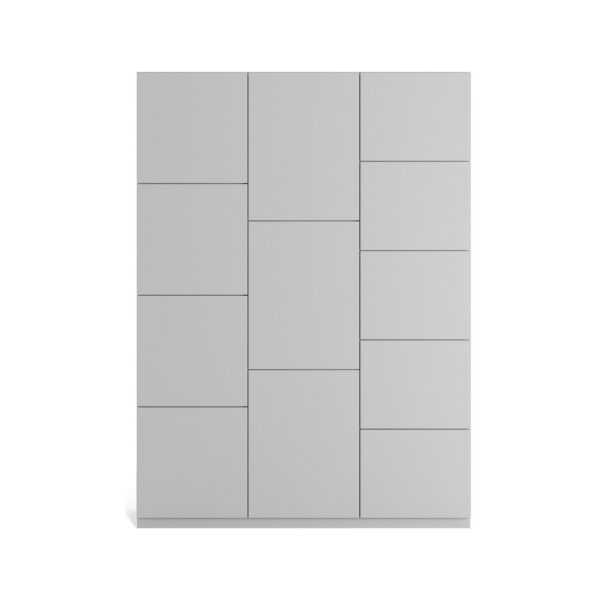 Layer Dolap
Cabinet
Layer Dolap
Cabinet
Modular cabinet combining coat storage and mail boxes in one system, for entrance halls.
First, depth: a standard office cabinet is 40 cm deep, a dimension set by an A4 lever-arch file lying flat. A 38 cm cabinet accommodates the folder but leaves no finger clearance; 40 cm is preferred for a frequently used archive.
Second, shelf span: paper folders are heavy and spans exceeding 90 cm sag in the middle over time. On a long wall, two modules are the correct solution rather than one long shelf. Third, the clearance in front: 120 cm is required for the door to open and for a person to pass; a cabinet opened several times a day should not be positioned on a wall facing a 90 cm corridor.
Office cabinets are 40 cm deep, a dimension set by A4 lever-arch files. Height steps are 83, 120, 160 and 197 cm, with 75 cm where a desk-height unit is required. Width starts at 36 cm per module and is extended by adding modules side by side.
A cabinet system built on one body size and connection method, allowing units to be added side by side or stacked at a later stage. The advantage is that the system can be extended while retaining existing units; the condition is that the first order is placed from a range that remains in production.
Steel is used in archive rooms and stores: higher load capacity, resistance to damp and impact, locking as standard. Melamine is used on visible walls: it matches the room palette and the desk range, and lockable doors remain available. The decision follows visibility rather than durability.
Once dimensions and headcount are supplied, an itemised quotation is prepared. The showroom is on Üsküp Caddesi in Çankaya; the products can be examined on site via the contact page.