









10 July 2026
Acoustic Insulation in Open-Plan Offices: Focus Pod and Divider Suggestions
Solutions for Noise Pollution in Open-Plan Offices Open-plan office layouts are widely used to encourage collaboration and increase space efficiency...
Solutions for Noise Pollution in Open-Plan Offices
Open-plan office layouts are widely used to encourage collaboration and increase space efficiency. However, the biggest disadvantage of this arrangement is the noise level, which disrupts concentration and reduces employee productivity. Research shows that 65% of office workers state noise is the biggest problem in open-plan offices. In this article, we will examine six different product types and their application areas to ensure acoustic comfort.
1. Phone Booths: Perfect for Short-Term Focus
Phone booths are an ideal solution for making private calls or for tasks requiring short-term focus in open-plan offices. These booths typically have a capacity for 1-2 people and are equipped with panels that can provide sound insulation between 20-25 dB. For example, the M3 model can be customized according to different office needs thanks to its modular structure. The ventilation system and LED lighting (typically 400 lux) inside the booth increase user comfort while reducing external speech sounds by 90%.
2. Focus Pods: Deep Work Areas
Larger than phone booths, focus pods are designed for 2-4 person groups to work without interruption. These pods offer 30-35 dB sound insulation and are covered with 50 mm thick acoustic foam. Surfaces used in the interior are made from materials with an NRC (Noise Reduction Coefficient) value above 0.85 to prevent sound reflection. The Pona model stands out with its ergonomic seating arrangement and 120 cm wide work surface. Focus pods are suitable for tasks requiring high concentration, such as software development or reporting, without creating a separate room within the office.
3. Acoustic Curtains: Flexible and Portable Solution
For offices that do not want to install a fixed structure, acoustic curtains serve both sound absorption and space division functions. These curtains, weighing 300-500 g/m², reduce sound transmission by 10-15 dB. Especially when hung in front of glass surfaces, they can reduce the reverberation time from 0.6 seconds to 0.3 seconds. Unlike modular dividers, acoustic curtains can be easily folded and used in different areas. This feature provides a great advantage in situations where meeting areas need to be temporarily separated.
4. Desk-Mounted Panels: Personal Sound Barrier
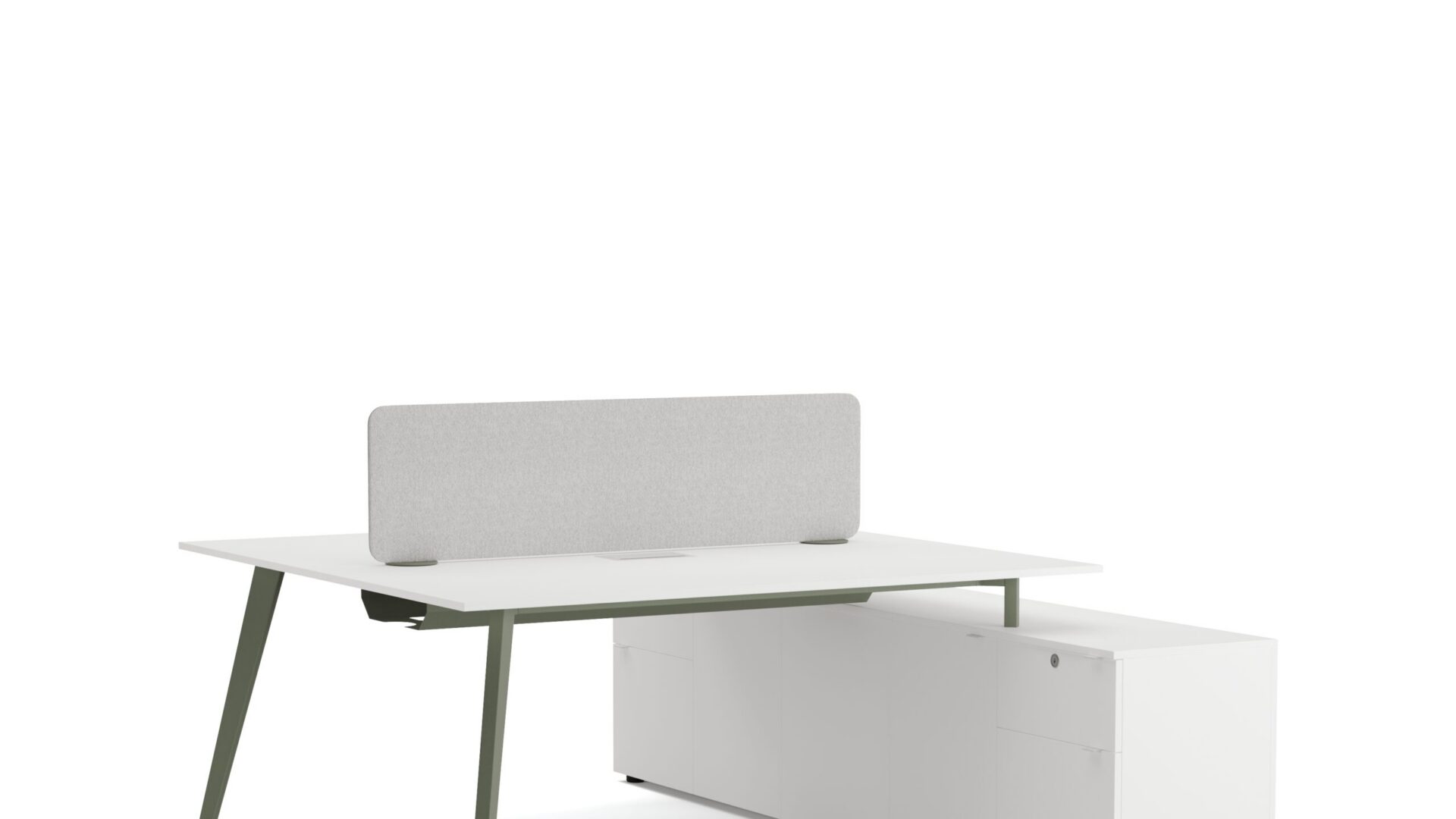
Desk-mounted panels, which allow employees to create a quieter environment at their own desks, are typically produced in sizes of 40×60 cm and 5 cm thick. These panels are mounted on the desk, covering the front and sides of the employee, thereby reducing ambient noise by 8-10 dB. The Cliff acoustic panel provides high absorption thanks to its 50 kg/m³ density rock wool core. Desk-mounted panels are frequently preferred, especially in call centers or offices with intensive teamwork, to enhance the sense of personal space.
5. Modular Dividers: Redefining Space
Modular divider systems are one of the most effective methods for dividing spaces within an office without constructing permanent walls. These systems consist of panels 120-180 cm high and 50-80 cm wide, providing up to 25 dB of sound insulation. The X-Change office partition system offers both visual privacy and acoustic comfort thanks to sound-absorbing panels mounted on an aluminum frame. Modular dividers can be easily disassembled and reassembled during office reconfigurations, creating a long-term cost advantage. The fabrics used on the panel surfaces have a Martindale abrasion resistance of over 40,000 cycles, ensuring long-lasting use.
6. Acoustic Ceilings: Stopping Sound from Above
A significant portion of noise in offices comes from the ceiling through reverberation. Acoustic ceiling panels, measuring 60×60 cm and 15-20 mm thick, have an NRC value ranging from 0.70-0.90. These panels absorb sound waves, reducing the overall noise level in the office by 5-7 dB. The P1 model has an A2 class fire resistance, complying with office safety standards. Acoustic ceilings are indispensable for solving reverberation problems, especially in open-plan offices with high ceilings (3 meters and above). Panel installation can be completed within 1-2 days by integrating them into the existing ceiling infrastructure.
Conclusion
Acoustic insulation in open-plan offices is achieved not with a single product, but by using different solutions in combination. Phone booths and focus pods increase individual concentration, while desk-mounted panels and modular dividers personalize workspaces. Acoustic curtains and ceilings reduce overall ambient noise, creating a calmer atmosphere. Each product type should be selected according to the office size, number of employees, and the nature of the work performed. The right combination of these solutions plays a critical role in increasing employee satisfaction and productivity.