









16 June 2026
Desk Dimensions: Standard Sizes and the Right Choice
Why Are Desk Dimensions Important?
The right desk dimensions directly affect productivity and physical health. Incorrect height or depth can lead to wrist, back, and neck pain; insufficient width restricts the workspace. Unlike standard furniture, determining dimensions suitable for personal needs and space is critical for long-term comfort.
Standard Desk Sizes (Width, Depth, Height)
Industry standards offer specific ranges for ergonomic work. However, these dimensions can be adjusted according to the user’s height and purpose of use. Kavela, in its Ankara workshop, bases its custom production on these standards, also meeting non-standard demands.
Height Standards
The height of a standard desk from the floor to the tabletop is between 72 cm and 76 cm. The most commonly used height is 74 cm. This dimension allows an average-height user (165-175 cm) to comfortably write by bending their elbow at a 90-degree angle. If the user’s height is above 180 cm, 76-78 cm is more suitable; if below 160 cm, 70-72 cm height is more appropriate.
Width Standards
Desk width varies according to the number of equipment to be used:
- Single-user basic use: 100 cm – 120 cm (sufficient for a laptop and a notebook only)
- Dual monitor or large workspace: 140 cm – 160 cm
- Executive or double-user use: 180 cm – 200 cm
Depth Standards
Desk depth is determined for monitor distance and comfortable arm position:
- Standard depth: 60 cm – 70 cm (ideal for a single monitor and keyboard)
- Generous depth: 75 cm – 80 cm (required for large monitors, drawing, or document review)
- Narrow depth: 50 cm (suitable only for laptop use or narrow spaces, but may cause eye distance issues)
Desk Dimensions According to Purpose of Use
Single-User Desk Dimensions
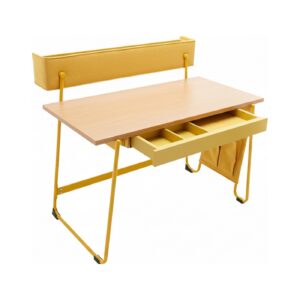
This is the most common choice for home offices or individual use. Recommended dimensions: 120 cm width x 60 cm depth x 74 cm height. These dimensions provide enough space for a monitor, keyboard, and a small notebook. For more intensive use, 140 cm width is ideal.
Double-User Desk Dimensions
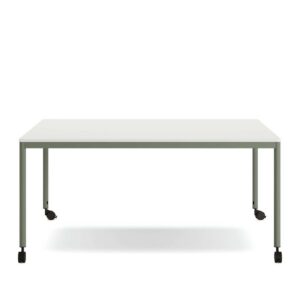
Designed for two people to work simultaneously. Width is critical to avoid disturbing each other in shared use. Minimum dimensions: 160 cm width x 70 cm depth. At least 80 cm of space should be allocated for each user. The height is still standard at 74 cm. For more comfortable use, 180 cm width is recommended.
L-Shaped Desk Dimensions
Ideal for corner use. Consists of two wings. Most common dimensions:
- Short wing: 120 cm – 140 cm (main work surface)
- Long wing: 140 cm – 180 cm (side surface or secondary workspace)
- Depth: 60 cm – 70 cm for both wings
- Height: 74 cm
L-shaped desks usually have a 90×90 cm space at the corner joint, which is suitable for monitor placement.
Executive Desk Dimensions
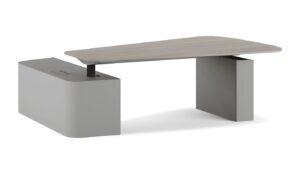
Offers a wider and more prestigious appearance. Often used as a meeting or document review area. Standard executive desk dimensions: 180 cm – 200 cm width x 80 cm – 90 cm depth x 74 cm – 76 cm height. The greater depth provides ample space for multiple monitors, documents, and decorative objects.
How to Calculate Ideal Desk Height for Individuals?
The correct height depends on the elbow angle. When sitting, your feet should be flat on the floor, and your elbows should comfortably reach the desk at a 90-100 degree angle. A practical formula:
Ideal desk height (cm) = Height (cm) x 0.45
For example, for a person 170 cm tall, the ideal height is approximately 76.5 cm. However, this formula gives an an average value. For a precise result:
- Sit upright in a chair.
- Bend your elbows at 90 degrees.
- Measure the distance from below your elbow to the desk surface. This distance should be your desk height.
If the desk you will use is a standard 74 cm and you are tall, you can compensate by using a higher chair and a footrest.
Sample Dimension Table
| Desk Type | Width (cm) | Depth (cm) | Height (cm) | Usage Area |
|---|---|---|---|---|
| Single-User (Basic) | 100 – 120 | 60 | 74 | Home office, student |
| Single-User (Generous) | 140 – 160 | 70 | 74 – 76 | Professional, dual monitor |
| Double-User | 160 – 200 | 70 – 80 | 74 | Shared office |
| L-Shaped Desk (Small) | 120+140 | 60 | 74 | Corner rooms |
| L-Shaped Desk (Large) | 160+180 | 70 | 74 – 76 | Large offices |
| Executive Desk | 180 – 200 | 80 – 90 | 76 | Executive offices |
Tips for Choosing the Right Desk
- Measure the space: Be sure to measure the width and depth of the area where you will place the desk. Leave at least 80 cm of space behind the desk for chair movement.
- Determine the number of users: For single-user desks, do not go below 120 cm. For double-user, 160 cm is the minimum.
- Consider equipment: Take into account the space occupied by equipment such as monitor size, printer, and phone. The depth should be sufficient for the monitor to be at eye level.
- Height-adjustable models: If multiple people will use it or if you want to switch to a sit-stand setup, opt for electric or manually adjustable desks.
- Material thickness: Tabletop thickness (usually 18 mm – 25 mm) affects durability. For heavy equipment, a thickness of 25 mm and above is recommended.
Frequently Asked Questions
What should I do if my desk height is not between 72 cm and 76 cm?
If you encounter a non-standard height, first check your chair’s height adjustment. If the chair can be raised, use a footrest to ensure your feet are flat on the floor. If the desk is too low and the chair cannot be lowered, you can add risers to the desk legs. As a permanent solution, ordering a custom-made desk from a workshop (like Kavela) is the healthiest option.
What is the minimum room size for an L-shaped desk?
Both wings of the L-shaped desk should be usable. For the smallest L-shaped desk dimensions (120 cm x 140 cm), the room should ideally be at least 250 cm x 250 cm. This dimension provides enough space for desk placement and chair movement. Using an L-shaped desk in smaller rooms may narrow the space; in this case, opt for a straight desk.
What is the main difference between an executive desk and a standard desk?
The main difference is depth and width. Executive desks typically have a depth of 80 cm to 90 cm, while standard desks are 60-70 cm. This extra depth creates a larger work surface on the desk for file organizers and decorative objects. Additionally, executive desks are produced with thicker materials and special coatings, which increases durability and aesthetics.
Related: For custom production options, see office desks Ankara office furniture.
Overview: You can check the office furniture dimensions guide for all office furniture categories.