









10 August 2026
Durability Difference Between Steel and Aluminum Furniture Frames
Key Differences Between Steel and Aluminum Furniture Frames The frame material of furniture used in offices and corporate spaces directly determines the product's lifespan and performance...
Key Differences Between Steel and Aluminum Furniture Frames
The frame material of furniture used in offices and corporate spaces directly determines the product’s lifespan and performance. Steel and aluminum are the two most commonly used metals in industrial furniture production. However, these two materials show significant differences in terms of load-bearing capacity, corrosion resistance, unit weight, and welding behavior. Knowing these differences is the first step in choosing the right product.
Load-Bearing Capacity and Static Strength
Steel, especially S235JR quality structural steel, is a material with a yield strength of around 235 MPa. This value is almost double the yield strength of aluminum alloys (e.g., 6063-T5), which is approximately 110-145 MPa. In practice, this means that a steel frame can bear much more static load than aluminum with the same cross-section. For example, a steel bunk bed using a 40×40 mm square profile can withstand dynamic loads up to 250 kg, while an aluminum profile of the same cross-section might undergo permanent deformation at 120-150 kg. Therefore, a steel frame is indispensable for products like steel worker bunk beds that are exposed to the weight of numerous users. Especially in two-story bunk bed systems, when the lower bunk needs to support the total load from the upper bunk, steel’s elastic modulus (210 GPa) is three times that of aluminum (70 GPa). This means steel will deflect three times less under the same load.
Corrosion Resistance and Surface Treatments
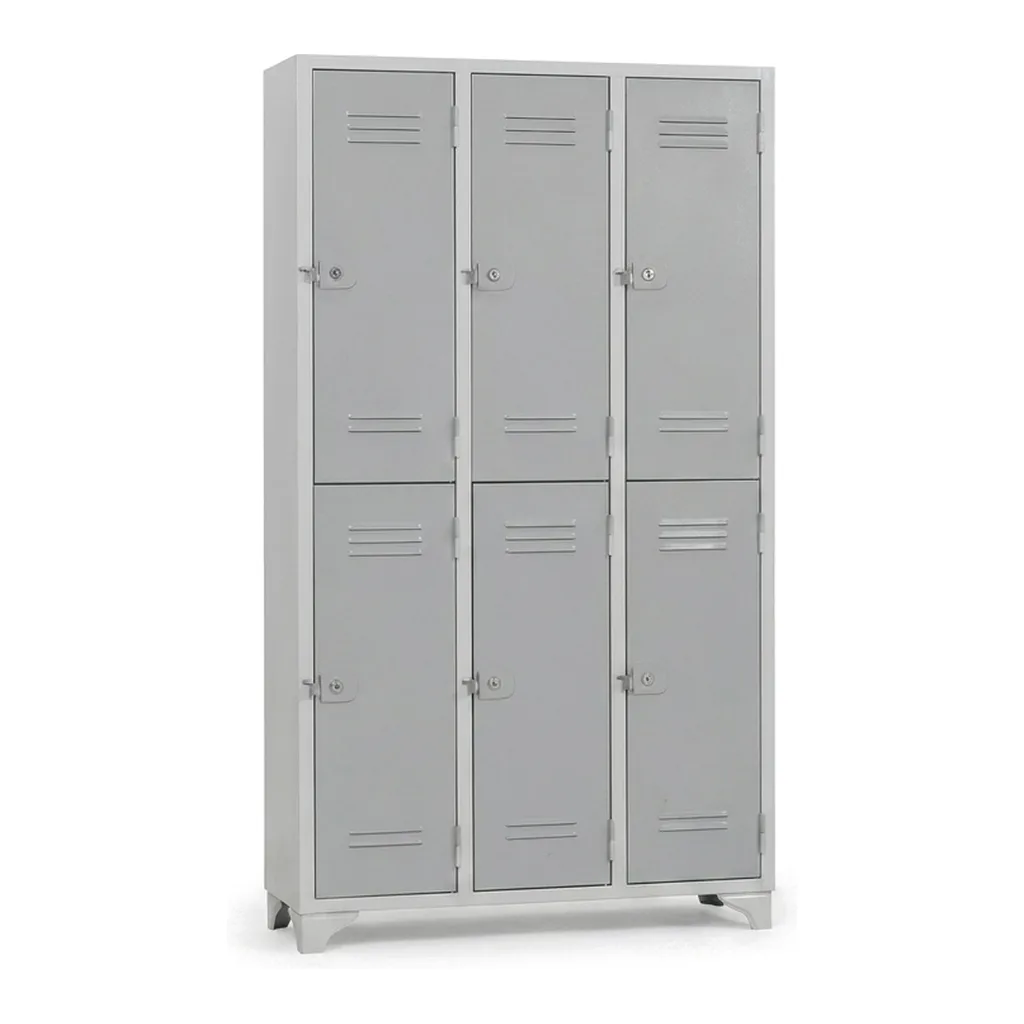
Aluminum’s greatest advantage is the aluminum oxide layer that spontaneously forms on its surface when it comes into contact with air. This layer protects the inner part of the material from external factors and provides a natural shield against corrosion, even when used unpainted. Steel does not have this property; when it comes into contact with moisture and oxygen, iron oxide, or rust, forms. Therefore, steel furniture frames must undergo surface treatment. Powder coating application isolates steel from the external environment with an epoxy-polyester mixture layer 60-80 microns thick. On the other hand, an electrostatically powder-coated steel cabinet can withstand a 500-hour salt spray test, while anodized aluminum surfaces can last up to 2000 hours. However, in dry indoor office environments, this difference is not very decisive in practice. While an aluminum frame is advantageous in humid environments such as changing rooms, shower areas, or outdoor storage, a steel 6-door steel locker coated with quality powder paint can be used for years without problems under normal office conditions.
Weight and Portability Balance
While aluminum’s density is 2.7 g/cm³, steel’s density is 7.85 g/cm³. This means that steel of the same volume is approximately three times heavier than aluminum. This difference is an important criterion in dynamic workspaces where office layouts frequently change. For example, the steel leg frame of a 180×80 cm meeting table weighs approximately 18-22 kg, while an aluminum frame can drop to 7-9 kg. However, this lightness also brings a disadvantage: aluminum is more prone to bending upon impact and has lower scratch resistance compared to steel. In heavy-duty products that remain in a fixed position and are not frequently moved, such as reinforced steel bunk bed models, weight is not a problem but rather an advantage for stability. High weight reduces the risk of tipping and ensures better grip on the floor. Therefore, steel should be preferred for fixed-installation dormitory and changing room furniture, while aluminum should be chosen for portable office partition systems.
Weld Quality and Connection Points
MIG/MAG welding is commonly used in steel frames, and because this process occurs at high temperatures, the weld point gains strength very close to that of the base material. In a well-executed steel weld, fracture tests typically show that the area around the weld, rather than the base metal itself, breaks; this indicates that the weld is stronger than the base material. The situation is different with aluminum. Due to aluminum’s high thermal conductivity, heat dissipates rapidly during welding, increasing the risk of porosity in the weld zone. Furthermore, the heat-affected zone (HAZ) formed after aluminum welding can reduce the material’s original strength by 50-60%. For this reason, bolt-fasteners or corner brackets are generally used instead of welding in aluminum-framed furniture. In steel, welded joints are both more economical and more durable. For example, in the production of profile steel bunk beds, all connection points being welded allows the product to be used for years without disassembly. While bolted systems tend to loosen over time, welded steel frames completely eliminate this problem.
Which Metal Should Be Preferred for Which Furniture?
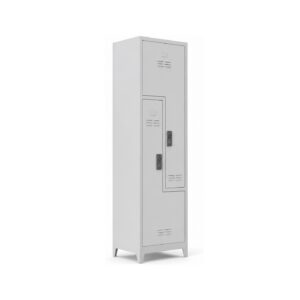
When making a choice, it is necessary to clarify the product’s usage scenario. Steel is always a priority for products that will be under heavy load, remain in a fixed position, and serve for many years. For example, in products commonly used by many users, such as the 15-compartment locker, having a steel frame where the door hinges are attached prevents door sagging and deformations. In these products, where steel sheet thickness varies between 0.8 mm and 1.2 mm, the frame supporting the body and door weight should be made of steel. Similarly, single steel locker models used in changing rooms maintain their frame integrity despite constant opening and closing of their doors. Aluminum, on the other hand, stands out more in portable office equipment, portable presentation tables, and light shelving systems. Furthermore, for outdoor use, an aluminum frame reduces maintenance costs to zero for products exposed to rain and moisture.
Cost and Life Cycle Analysis
From a unit price perspective, the raw material cost of steel is approximately 30-40% lower than aluminum. However, the production of a steel-framed furniture involves additional processes such as welding labor, powder coating, and anti-corrosion primer. Nevertheless, the total production cost for steel is 15-20% more advantageous compared to aluminum. When calculating the life cycle, both materials provide problem-free service for 10-15 years under normal indoor office conditions. However, in high-usage areas, such as industrial facilities or dormitories, steel’s high wear resistance extends the product life by at least 5 years compared to aluminum. A scratch or paint peel on a steel frame can lead to the onset of rust on the surface; in this case, the lifespan can be extended by intervening with touch-up paint. In aluminum, paint peeling does not pose a serious corrosion risk, but a permanent mark remains on the surface.
Conclusion
The choice between steel and aluminum depends entirely on the usage scenario and priorities. If you are looking for load-bearing capacity, weld strength, and cost advantage, steel is logical; if you are looking for lightness, natural corrosion resistance, and an aesthetic surface, an aluminum frame is logical. For fixed-installation, heavily used, and long-lifespan products such as lockers, bunk beds, and storage lockers, a steel frame is a more appropriate engineering choice. When portability and outdoor applications are concerned, aluminum’s lightness and oxide layer advantage stand out. Both materials, when combined with correct production processes, can be safely used in office furniture for years.