









15 June 2026
Executive Desk Selection: Size, Material, and Model Guide
First Step in Executive Desk Selection: Needs Analysis
An executive desk is not just a work surface; it is also the center of authority, professionalism, and your workflow in your office. Without the right choice, you may encounter ergonomic problems that reduce your productivity during the day or an appearance that is incompatible with your office decor. This guide addresses three fundamental elements to consider when purchasing an executive desk —size, material, and model— with concrete data.
1. Size: Standards and Ergonomics
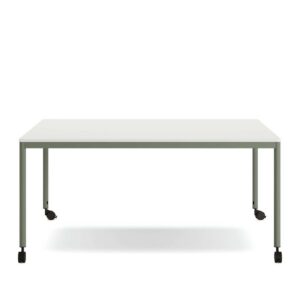
The dimensions of an executive desk directly affect both your physical comfort and the hierarchical perception in the office. Commonly available standard sizes in the market are 160×80 cm, 180×90 cm, and 200×100 cm. However, the ideal size varies according to your office space and usage habits.
- Desk height: For ergonomic work, the desk height should be between 72-76 cm. 75 cm is ideal for most users. The difference between your chair height (generally 45-50 cm) should allow your elbows to comfortably reach the desk at a 90-degree angle.
- Depth (Width): 80 cm depth is sufficient for a single monitor and basic office supplies. If you need dual monitors, a large document area, or space for a notebook for meetings, 90-100 cm depth is much more comfortable. 100 cm depth also makes the desk visually more impressive.
- Width (Length): 160 cm is suitable for small offices or a minimal setup. 180 cm is the most preferred size in medium-sized offices. Widths of 200 cm and above are ideal for large executive rooms, multiple monitors, and extensive paperwork. Remember to leave at least 60-70 cm of space on both sides of the desk to move comfortably in the room.
Custom size requirement: Standard sizes may not fit every office plan. Especially for corner rooms, areas with columns, or asymmetrical walls, custom production is the most accurate solution. At Kavela’s Ankara workshop, custom-sized production can be made to perfectly match your office’s existing plan; thus, you won’t have to deal with a desk that is too big or too small.
2. Material: Durability and Aesthetics
Material selection determines the desk’s lifespan, ease of maintenance, and the atmosphere it will create in your office. Each material has its unique advantages.
- Melamine: An economical and practical option. It is resistant to scratches, stains, and moisture. It offers a wide range of color and pattern options. It is especially suitable for open-plan offices with many people and subject to heavy use. However, melamine cannot fully replicate the feel of real wood.
- MDF Lacquer: Offers a modern and stylish look with glossy or matte surface options. The lacquer surface is dust-resistant and easy to clean. It is a good choice if you want to add a contemporary touch to your office. Its disadvantage is that it can crack or break upon impact, much like a car hood. Therefore, careful use is required.
- Solid Wood (Oak, Walnut): The most prestigious and long-lasting option. Oak offers a warm, natural look with its light yellowish color and prominent grain pattern. Walnut, with its dark brown tones and luxurious appearance, is frequently preferred in executive offices. Solid wood gains a natural patina over time and appreciates in value over the years. It requires more careful maintenance; regular oiling and protection from direct sunlight are recommended.
- MDF Veneer (Wood Veneer): An excellent alternative for those who cannot afford the cost of solid wood. Real oak or walnut veneer is applied over an MDF core. This combines the aesthetics of solid wood with the dimensional stability and more affordable price of MDF. The thickness of the veneer (should be at least 0.6 mm) and the quality of the varnish used directly affect the product’s lifespan.
Things to consider when choosing material: The desk legs and drawer fronts should also be made of the same quality material. In cheap productions, only the tabletop might be made of quality material, while other parts might be made of low-quality particle board. Ensure all parts are of the same standard.
3. Model: Classic, Modern, and L-Shaped Options
The model determines the desk’s functionality and your office’s overall design.
- Classic Models: Generally produced from solid wood or wood veneer materials. Carved details, curved corners, and large drawers are characteristic features of these models. Suitable for law firms, accounting firms, or offices with a traditional decor concept. They convey a message of trust and establishment.
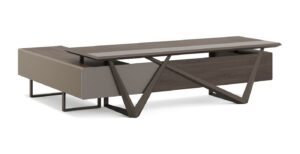
- Modern Models: Characterized by clean lines, geometric forms, and metal leg details. MDF lacquer or melamine material is generally used. They offer integrated solutions such as cable channels, touch surfaces, and hidden compartments for technological devices. Ideal for start-ups, creative agencies, and technology companies.
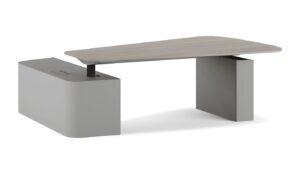
- L-Shaped Executive Desks: One of the most functional models. It forms an L-shape with a main desk (generally 180×90 cm) and a side extension (generally 120×60 cm). This model allows for both computer work and document review or short meetings on the side. It provides excellent space utilization for corner rooms. The side on which the L-desk is located (right or left) should be determined according to the position of your office’s door and windows.
Things to consider when choosing a model: Who will you be working with at your desk? Will you be using it alone, or will you be sitting opposite others for short meetings? If you frequently have one-on-one meetings with team members, you should choose a model with an open and spacious front. Also, make sure there is enough space under the desk for you to comfortably stretch your legs.
Frequently Asked Questions
How should I determine the dimensions of my executive desk?
First, take the net measurements of your room. You should leave at least 70 cm of space on both sides of the desk, and 90-100 cm behind it to comfortably slide your chair back. A desk height of 75 cm and a depth of at least 80 cm are fundamental rules for ergonomics. If standard sizes do not fit your room, prefer companies that offer custom production. Kavela can produce desks custom-sized according to your office plan at its Ankara workshop.
Is melamine or solid wood better?
This entirely depends on your budget and expectations. Melamine offers low cost and high durability; it is especially resistant to scratches in heavy use. Solid wood (oak or walnut), on the other hand, is a long-lasting, prestigious, and repairable material. You can sand and re-oil a scratch on a solid wood desk, which is not possible with melamine. If your office reflects brand value and you want to make a long-term investment, solid wood is the right choice; if your budget is limited and you seek practicality, melamine is the correct choice.
Should I get an L-shaped executive desk or a straight desk?
L-shaped desks are ideal if you want to use space efficiently and divide your workflow into two separate areas. For example, you can do computer work on one arm while handling filing or signing documents on the other. If your room has a narrow and long structure, an L-shaped desk might make the space feel smaller. A straight desk, on the other hand, offers a simpler and more minimalist look. Make your decision based on the layout of existing furniture in your office and your daily work routine.
Related: For executive desks and more, browse our Kavela catalogs and collections: Ankara office furniture office desks.