









8 July 2026
Height-Adjustable Sit-Stand Desk Models
Height-Adjustable Sit-Stand Desk Models: A Comprehensive Comparison One of the most significant transformations in the office furniture sector over the last decade, fixed...
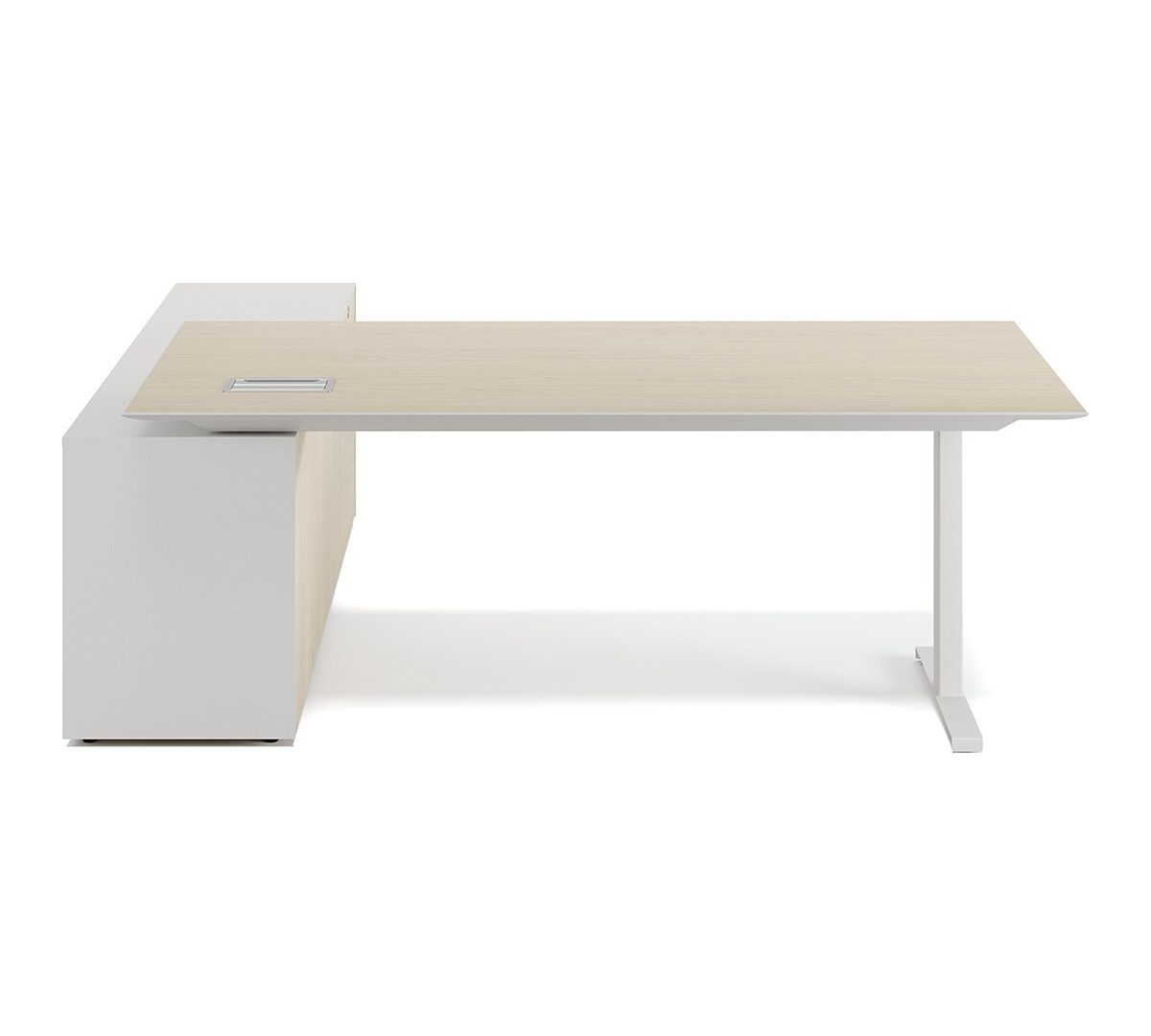
Height-Adjustable Sit-Stand Desk Models: A Comprehensive Comparison
One of the most significant transformations in the office furniture sector over the last decade has been the shift from fixed-height desks to adjustable models. Especially in office projects in Ankara, sit-stand desks have become almost standard to increase employee comfort and productivity. However, there are two main systems on the market: electric and manual height-adjustable desks. Evaluating the differences between these two systems based on critical parameters such as motor count, memory positions, child protection, and load capacity is vital for making the right choice. In this article, we compare models suitable for different usage scenarios in light of technical data.
Electric Systems: Motor Count and Memory Positions
Electric models offer ease of use and precise adjustment capabilities. The most critical differentiator in this system is the motor count. Single-motor systems generally have a carrying capacity of 70-80 kg, while dual-motor systems can safely lift loads up to 120 kg. For example, the UpDown model is a dual-motor system and offers a 120 kg load capacity. This is ideal for setups with large monitor arms, heavy document shelves, or multiple devices on the desk simultaneously.
The number of memory positions is also an important difference in electric models. Entry-level models typically offer 2 memory positions (sitting and standing), while upper-segment models can have up to 4 memory positions. The Era model comes with 4 memory positions and a digital display. This means that different users sharing the same desk (e.g., shift workers) can recall their ideal heights with a single button. Lifting speed also comes into play here; quality dual-motor systems move at 38 mm/second, while single-motor ones remain around 25 mm/second.
Manual Systems: Budget-Friendly and Child Protection
Manual height-adjustable desks typically operate with a crank handle or a gas spring mechanism. The biggest advantage of these systems is their lower cost and reduced risk of malfunction, as they do not contain an electric motor and control unit. They are a suitable option especially for home offices or areas where positions are changed occasionally. However, their load capacities are generally limited to 50-70 kg.
Child protection is critical, especially for desks used by families. In electric models, this is usually provided by a sensor system. When the desk encounters an obstacle of 2-3 cm while rising or lowering, the motor automatically stops and retracts. This feature is standard in the Flo model and offers a safety guarantee for families with children. Manual systems, on the other hand, have passive safety measures such as a physical locking mechanism or a removable crank handle; there is no active sensor protection.
Load Capacity and Tabletop Dimensions
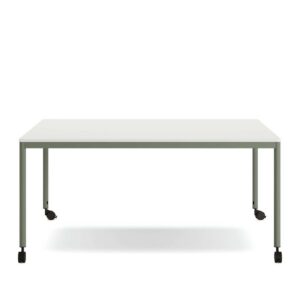
The maximum load a sit-stand desk can carry depends not only on motor power but also on the leg and column structure. Models with steel legs and 3-stage columns can carry higher loads more stably. For example, the X-8 model comes with a large tabletop like 140×70 cm and has a 100 kg load capacity. This means two 27-inch monitors, a laptop, and peripherals can be comfortably placed. For more compact spaces, the Practika P3 – Everyday Collection model with a 120×60 cm tabletop saves space in narrow offices.
Tabletop material also indirectly affects load capacity. 25 mm thick MDF or melamine-coated tabletops can distribute more weight than 18 mm ones. Additionally, a steel cable management tray located under the tabletop prevents clutter under the desk and prevents cables from getting pinched. This feature extends cable life, especially when height adjustments are made frequently.
Selection Based on Usage Scenarios
When choosing a model for an office, the number of users and frequency of use are decisive. If more than 10 people will use the same model in an open-plan office, a dual-motor model with memory function (e.g., UpDown or Era) is more logical. The motor noise level in these models is generally around 45 dB, which does not disturb a quiet office environment. If it’s an executive office to be used by only a few people, a single-motor but stylishly designed model like Fleme might suffice. Fleme is a balanced option for individual use with an 80 kg load capacity and 3 memory positions.
Manual systems are generally suitable for users who do not change positions more than 1-2 times a day. For example, in a reception area or a guest workstation, the lack of an electrical connection simplifies installation. However, it should be noted that while it takes an average of 15-20 seconds to crank a manual system into a standing position, an electric model completes the same operation in 8-10 seconds.
Conclusion
The primary determinants when choosing a height-adjustable sit-stand desk are usage intensity and budget. Dual-motor models with 4 memory positions and a 120 kg load capacity are the most suitable options for professional and intensive use. Manual systems, on the other hand, are ideal for users seeking lower cost and simplicity. In both systems, it is essential to check safety parameters such as child protection and load capacity. The right choice will directly impact employee health and office productivity.