









5 August 2026
Home Office Desks: By 100, 120, 140, and 160 cm Widths
Choosing a Home Office Desk by Square Meter: From 100 cm to 160 cm. Setting up a workspace in an apartment often requires balancing square footage with desk width...
Choosing a Home Office Desk by Square Meter: From 100 cm to 160 cm
Setting up a workspace in an apartment often requires striking a balance between square footage and desk width. Choosing the wrong size either creates an unwieldy giant in a narrow room or proves insufficient in a spacious study. The correct approach involves measuring the available space and deciding based on your daily workflow (dual monitors, documents, or drawing). In this article, I will discuss desks of different widths, from 100 cm to 160 cm, along with the scenarios they are suitable for in apartment living conditions.
100 cm Width: For Narrow Hallways and Compact Work Nooks
A 100 cm wide desk is ideal, especially for studio apartments or workspaces tucked into a corner of a bedroom. This size allows you to place a single 24-inch monitor (approximately 54 cm wide) and a small laptop side-by-side; however, it is insufficient for a dual monitor setup. If the depth is standardly accepted as 60 cm, a usable area of 40 cm remains on the desktop; this provides comfortable movement space for a keyboard and mouse.
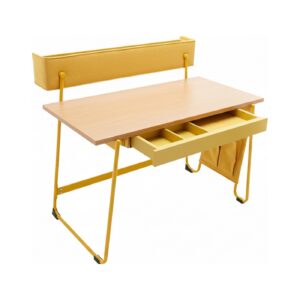
One of the models that can be considered in this category is Aone. Aone’s compact body structure fits perfectly into a 100 cm wide wall recess. Especially when you want to convert a 2.5 square meter area into a work nook, remember that you need to leave at least a 70 cm passage corridor between the desk and the wall. Otherwise, movement will be restricted when you push the chair back.
- Installation tip: Position the 100 cm desk at a 90-degree angle to the window, not parallel to it. This way, natural light won’t reflect on the screen, and the 60 cm deep desk surface will offer a shadow-free workspace throughout the day.
- Storage solution: When choosing a desk of this size, opt for open shelf systems underneath instead of models with drawers. On a 100 cm desk, a drawer narrows the legroom and restricts your leg movement by 15-20 cm.
120 cm Width: The Standard Solution for Mid-Sized Apartments
120 cm can be considered the “golden ratio” for an apartment. This width can accommodate a 27-inch monitor (approximately 62 cm) along with a notebook or a second laptop simultaneously. Furthermore, a 120 cm desk is also suitable for two people working alternately; however, if two people are working at the same time, each user gets 60 cm of space, which is the minimum comfort level.
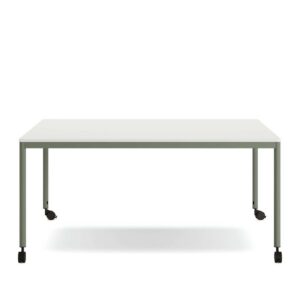
In this segment, the Era-L model stands out. The 120 cm version of Era-L, with its classic straight-line design, fits perfectly against the room’s wall. Especially when placed in a 12-15 square meter room, if you leave at least 80 cm of space between the desk and the door, the room’s spaciousness will be maintained. The surface material should have a high Martindale abrasion value; with 8 hours of daily use, elbow contact is intense on a 120 cm desk, so color changes may be observed on melamine-coated surfaces after 5 years.
- Ergonomics note: When choosing a 120 cm wide desk, use a monitor stand 15-20 cm high to keep the monitor at eye level. This reduces the risk of neck hernia and allows you to use the 60 cm depth of the desk surface more efficiently.
- Cable management: For 120 cm desks, prefer models with a cable channel at the back. Otherwise, the clutter of 5-6 cables (monitor, PC, speakers, charging) will overshadow the advantage of the desk’s width.
140 cm Width: For Multi-Monitor and Creative Work
A 140 cm desk is the minimum threshold for professionals using multiple screens, such as graphic designers, architects, or financial analysts. With this width, you can place two 24-inch monitors side-by-side (total 108 cm) and leave a 30 cm writing area on the side. It also offers sufficient surface for a drawing tablet or large document folders.
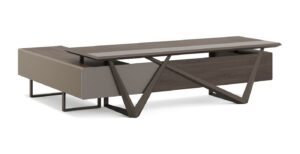
One of the recommended models for 140 cm is Large. The 140 cm version of Large offers an L-shaped option suitable for corner use. If you want to utilize a corner of your room, an L-shaped desk measuring 140×140 cm creates two separate work surfaces: a computer on the main surface and a document review area on the side surface. This arrangement is ideal for efficiently using a 9 square meter room; however, ensure that the shorter arm of the L-shape is not less than 60 cm.
- Lighting requirement: On a 140 cm wide desk, a single desk lamp is insufficient. To uniformly illuminate a 140 cm surface, I recommend using an LED panel with a color temperature of 4000-5000 Kelvin and at least 1200 lumens output, or a long-arm Tube Micro pendant lamp. The pendant lamp should be hung exactly in the middle of the desk, 70-80 cm above the surface.
- Wall-mount alternative: You can eliminate the legs by fixing the 140 cm desk to the wall. This leaves the space underneath completely open, and the 60 cm deep desk can be reduced to 45 cm in depth, saving space. However, concrete or brick walls are essential for wall mounting; this application is risky on plasterboard walls.
160 cm Width: For Spacious Workrooms and Dual Use
160 cm is the “premium” segment for an apartment. This width allows two people to work comfortably at the same time; each user gets 80 cm of personal space, which is close to office standards. Furthermore, for single-person use, you can fit a printer, a scanner, and a filing shelf simultaneously on the 160 cm desk surface.
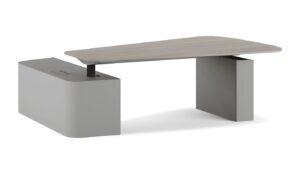
For this size, you can consider the Planet R model. The 160 cm version of Planet R, with its rounded corner design, reduces the risk of bumping in narrow corridors; this safety detail is especially important in homes with children. When placing a 160 cm desk, the room should be at least 12 square meters. Otherwise, the desk will look like a giant block squeezed between furniture.
- Dual monitor + laptop: With a 160 cm width, you can place a 32-inch monitor (approximately 72 cm) and a 15-inch laptop side-by-side; the total area occupied is around 110 cm. The remaining 50 cm of space is sufficient for a cup of coffee and a notebook.
- Sound insulation: 160 cm desks generally have thicker leg profiles. This increases the surface area in contact with the floor and reduces keyboard vibrations. However, if you have a downstairs neighbor, I recommend applying 5 mm thick felt tape under the desk; this reduces impact sound by up to 40 dB.
Corner Use and L-Shaped Alternatives
The most effective way to efficiently use space in an apartment is with corner desks. An L-shaped desk measuring 140×140 cm takes up less space than a straight 160 cm desk because it utilizes two sides of the wall. However, a point to consider with L-shaped desks is to ensure that the 90-degree angle in the inner corner does not hit your legs. Therefore, prefer rounded models that leave a 10-15 cm gap in the inner corner.
Placing the monitor in the inner corner of corner desks narrows your field of vision. Instead, it is more ergonomic to place the monitor in the middle of the main surface and the keyboard on the side surface. This way, you work by constantly rotating between the two surfaces; this also reduces spinal load during long sessions.
Choosing Accessories to Complement the Desk
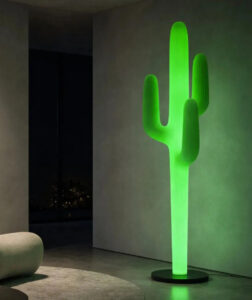
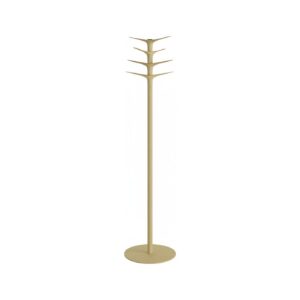
Regardless of desk width, the comfort of the workspace is not limited to the desk alone. For 100-120 cm desks, you can keep items like jackets and bags off the desk surface by using vertical storage solutions on the floor, such as the Avion coat rack. This clears the desktop, especially in narrow work nooks, and makes the entire 60 cm depth functional.
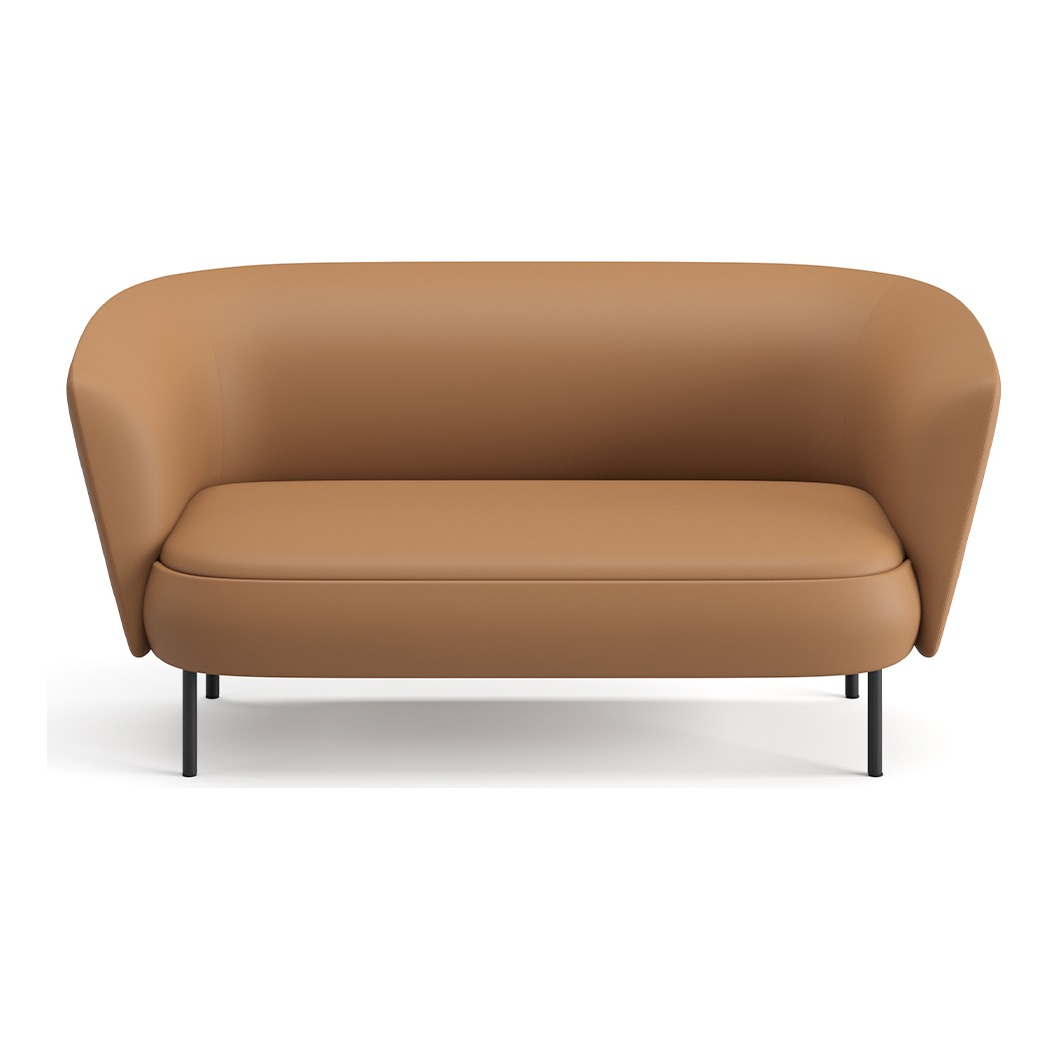
For wider desks (140-160 cm), seating area becomes important. If you place a 60 cm deep Glory sofa in front of a 160 cm desk, you need to leave at least 60 cm of passage space between the desk and the sofa. This means that using a 160 cm desk requires a total wall width of 160 (desk) + 60 (passage) + 60 (sofa) = 280 cm. If you cannot meet this measurement, it is more logical to choose a 140 cm desk.
Conclusion
Choosing a desk for an apartment begins by first measuring the available square footage and wall spaces; 100 cm is suitable for compact solutions, 120 cm for standard use, 140 cm for multi-monitor setups, and 160 cm for dual-person or spacious workspaces. L-shaped models save space for those looking to utilize corner areas, but the inner corner gap and legroom must be considered. When making your choice, consider not only the desk width but also the passage corridor between the desk and the wall (minimum 70-80 cm) and lighting needs. The correct size is the desk that preserves both ergonomic comfort and the spaciousness of the room.