














28 February 2026
How to Adjust Lumbar Support: An Ergonomic Office Chair Guide
Working long hours at a desk can pose serious risks to our spinal health. However, knowing how to properly adjust an ergonomic office chair and its lumbar support is key to minimizing these risks. In this comprehensive guide, you will find step-by-step answers to the question of how to adjust lumbar support, learning all the details you need for a healthy sitting posture. Your comfort...
In today’s digital age, many people spend a significant portion of their working hours at a desk. This can lead to health problems such as back and lower back pain due to incorrect sitting postures and inadequate ergonomics. But don’t worry! Knowing how to properly adjust an ergonomic office chair, and specifically its crucial lumbar support, is one of the most effective ways to prevent these issues and protect your long-term spinal health. This guide will not only teach you how to adjust a chair but will also explain in detail the general principles of an ergonomic workspace, why lumbar support is so critical, and how to make the most suitable adjustments for your personal needs. Remember, the correct settings on your chair not only enhance your physical comfort but also positively impact your concentration and overall productivity. Let’s embark on this journey together to unlock the doors to a healthy and comfortable work setup, especially when considering Turkey office furniture for your workspace.
Key Components and Importance of an Ergonomic Office Chair
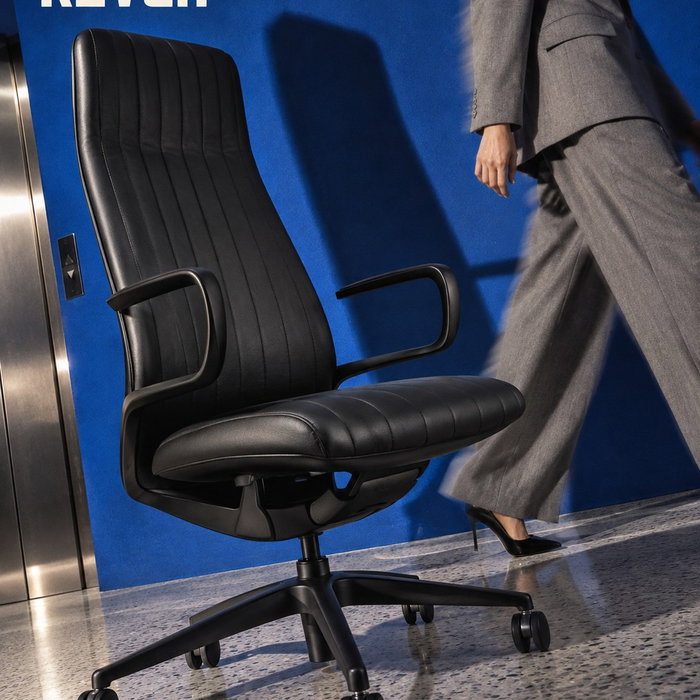
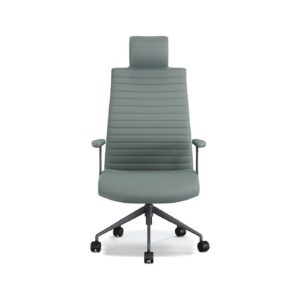
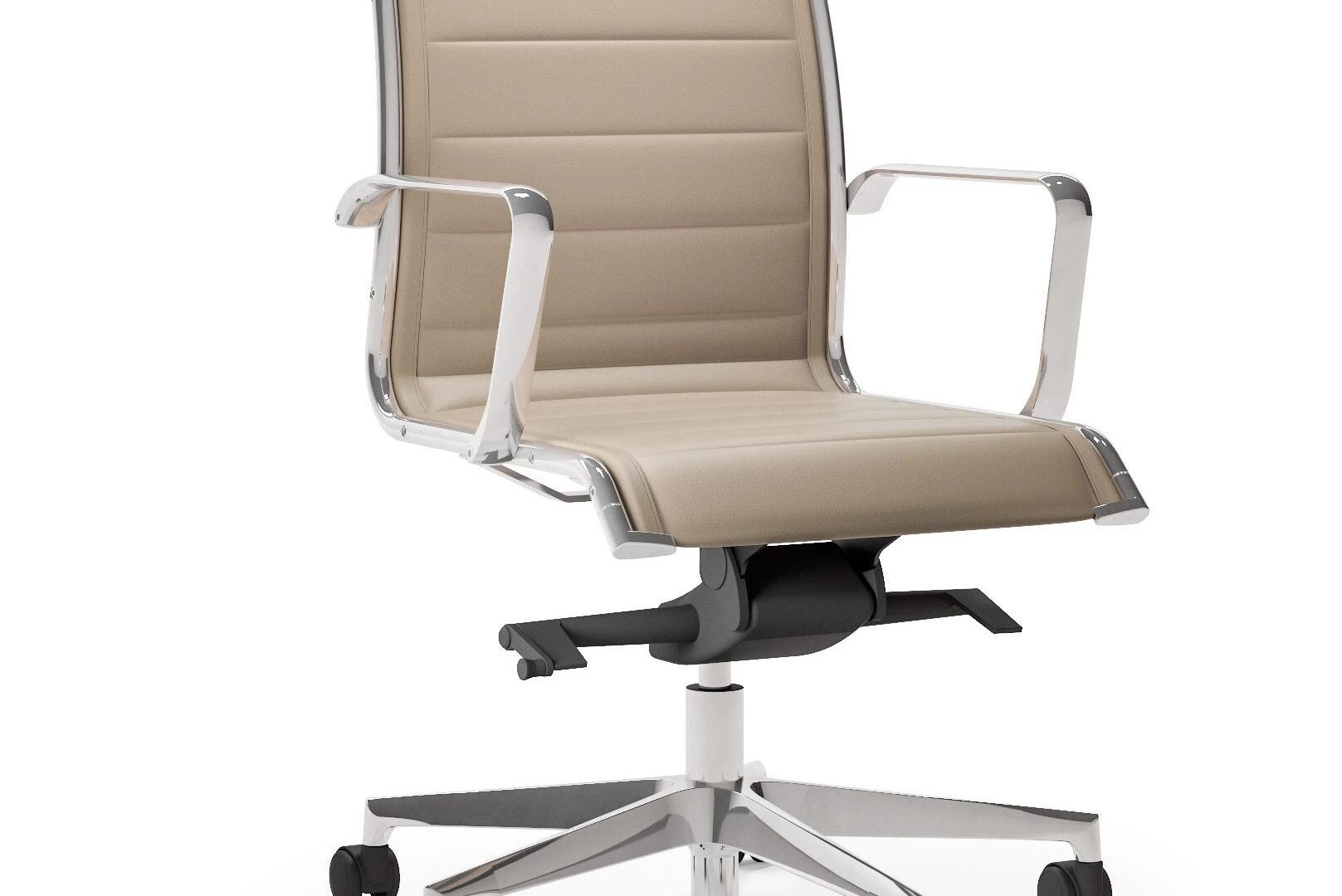
What makes a work chair ‘ergonomic’? The first answer to this question is that the chair is designed to support the natural shape of your body and provide comfort even during prolonged sitting. An ergonomic chair not only looks aesthetically pleasing but is also designed according to scientific principles to protect your spinal health, improve blood circulation, and reduce muscle tension. Such chairs typically stand out for their wealth of adjustable features. Components like height adjustment, seat depth, armrest adjustments, backrest tilt, and of course, lumbar support adjustment, are designed to adapt to each user’s unique body structure and work habits.
For example, correctly adjusting the chair height ensures your feet are flat on the floor and your knees are bent at a 90-degree angle, which reduces pressure on your legs. Seat depth adjustment prevents blood flow restriction by leaving a small gap between the front edge of the seat and the back of your knees. Armrests should support your arms to reduce shoulder and neck tension. However, among all these features, perhaps the most critical is the lumbar support, which maintains the natural S-curve of your spine. Sitting for long periods in an incorrect chair can disrupt your spine’s natural curve, leading to slouching, weakening of back muscles, and chronic lower back pain. Therefore, choosing an ergonomic office chair and making the correct adjustments is a vital investment not only for immediate comfort but also for your long-term health and well-being. Remember, the right chair is not just a piece of furniture; it’s a supporter of your health and productivity, a crucial element of effective ergonomic office design.
What is Lumbar Support and Why is it Vitally Important?
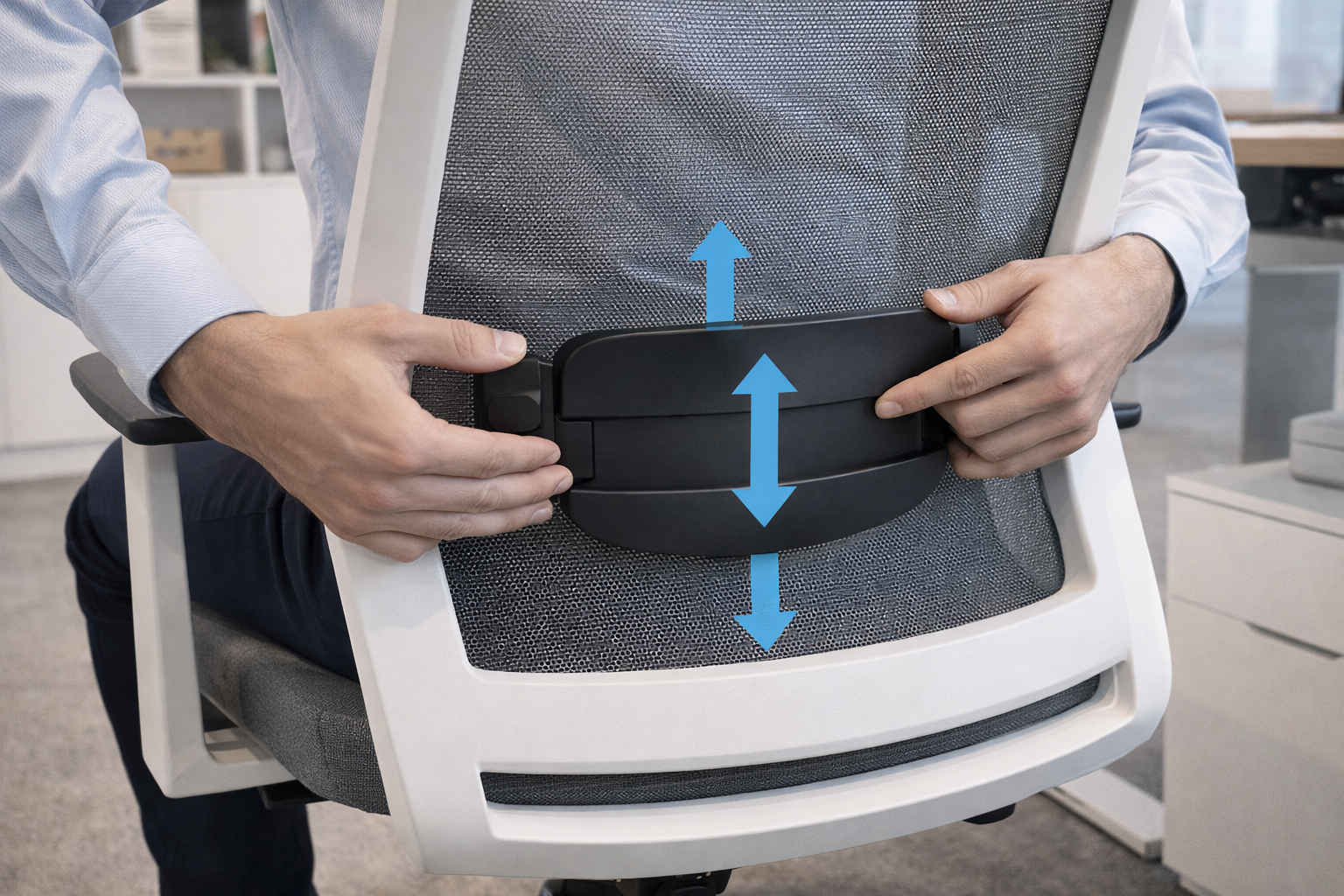
Our spine is one of the central and most important structures of our body. The lumbar region, specifically, carries a large portion of our body weight and plays a key role in our movements. This region naturally has a slight inward curve (lordosis). When we sit for long periods, this natural curve tends to disappear, and the spine flattens or even takes on an outward curve (kyphosis), placing excessive load on the discs and ligaments. This is precisely where lumbar support comes in. Lumbar support is an often-adjustable support located in the backrest of your office chair, designed to maintain the natural lumbar curve of your spine.
The vital importance of lumbar support can be explained from several perspectives. Firstly, it reduces the pressure on the discs by maintaining the natural curve of the spine. This lowers the risk of herniated discs and alleviates the severity of existing lower back pain. Secondly, proper lumbar support prevents your back muscles from overstraining. Without support, your back muscles have to constantly work to keep your spine upright, leading to muscle fatigue and pain. Thirdly, it improves blood circulation and prevents nerve compression. Fourthly, it improves your overall posture, reducing neck and shoulder tension, and contributing to a healthier and more productive work environment, a key consideration for any Turkey office furniture setup.