











19 April 2026
How to Choose a Sofa: Frame, Foam and Fabric Explained
Understanding how to choose a sofa extends far beyond selecting a color or style. It's an exercise in material science, engineering, and ergonomics. A sofa is not merely a decorative object; it is a significant investment in your daily comfort and the structural anchor of your living space. The difference between a piece that lasts three years and one that serves you for over a decade lies in its invisible components: the frame's timber, the density of its foam, and the abrasion resistance of its fabric. This guide deconstructs the sofa into its core elements, providing the technical vocabulary and objective metrics needed to make an informed decision.
From an atelier's perspective, a sofa's value is calculated by its structural integrity and material quality, not by fleeting trends. We will examine the critical specifications that define a well-made piece, from the kiln-drying process of a beech wood frame to the Martindale rating of upholstery. We will discuss why a foam density of 35 kg/m³ is the professional benchmark for durability and explain the functional differences between spring systems. This is the science of sofa selection, designed to empower you to look past the showroom floor and assess the true quality of the furniture you bring into your home.
The Frame: Is It Kiln-Dried Beech?
The sofa's skeleton, its frame, is the most critical component for longevity. The industry standard for high-quality construction is a frame made from solid kiln-dried hardwood, with beech being a preferred material due to its strength and fine grain. Kiln-drying is a controlled process that reduces the moisture content of the wood to a specific level (typically 6-8%), which is crucial for preventing warping, cracking, and splitting as the wood acclimates to the humidity levels in your home. This stability ensures that the joints remain tight and the overall structure stays rigid for years to come.
In contrast, frames made from softwoods like pine or from composite materials such as particleboard or MDF are significantly less durable. Pine is more susceptible to dents and flexing, while particleboard can degrade quickly, especially if exposed to moisture, and lacks the strength to hold screws and staples securely over time. When inquiring about a sofa, the first question should always be about the frame material. A manufacturer's confidence in specifying 'kiln-dried solid beech' is a primary indicator of quality, often doubling the functional lifespan of the sofa compared to a pine or composite alternative.
Joinery is the second pillar of frame integrity. Look for traditional techniques like mortise-and-tenon joints, dowels, or corner blocks that are both glued and screwed into place. These methods provide superior strength compared to frames that are simply stapled together. Modern precision techniques using CNC machines can also produce incredibly strong and accurate joints. A well-constructed frame is the non-negotiable foundation upon which all other quality components are built.
Foam Density: What Does kg/m³ Mean for Comfort and Durability?
The foam used in sofa cushions determines both the immediate comfort and the long-term resilience of the seating. The key metric for foam quality is density, measured in kilograms per cubic meter (kg/m³). This figure does not refer to firmness, but rather to the mass of the material packed into a given volume. Higher density foam contains more material, which means it can better withstand compression over years of use without collapsing or forming permanent indentations.
For seat cushions, a high-resilience (HR) foam with a density of 35 kg/m³ is the professional minimum for a durable, supportive sofa. This density provides a balance of comfort and longevity suitable for daily residential use. Foams with densities below 30 kg/m³ will degrade noticeably faster, leading to a sagging and unsupportive seat within a few years. For a premium, contract-grade experience, or for households with very high usage, look for densities of 40 kg/m³ or higher. These foams offer exceptional support and can maintain their shape and performance for well over a decade.
It's also important to consider the different foam requirements for various parts of the sofa. Back cushions and armrests do not bear the same direct body weight as seat cushions, so they can utilize a slightly lower density foam (e.g., 25-30 kg/m³) for a softer feel without compromising the sofa's overall structural lifespan. Often, high-quality cushions are wrapped in a layer of Dacron (polyester fiberfill), which softens the edges of the foam block, creates a plumper, more inviting look, and helps prevent the fabric cover from shifting or wrinkling.
Firmness vs. Density
It is a common misconception that density equals firmness. Firmness, measured by an ILD (Indentation Load Deflection) rating, is an independent property. A 40 kg/m³ foam can be engineered to feel soft, medium, or firm. High density is about the foam's ability to bounce back and resist degradation over time, not its initial feel. A quality manufacturer can offer different firmness levels using the same high-density base foam to tailor the sit to your preference.
Fabric Durability: Understanding the Martindale Value
Upholstery fabric is the most visible and tactile component of a sofa, but its selection should be driven by performance data, not just aesthetics. The primary industry standard for measuring the abrasion resistance of a fabric is the Martindale test. In this test, a mechanical head oscillates in a figure-eight motion, rubbing a piece of worsted wool or sandpaper against the fabric sample under a specific pressure. The 'Martindale value' is the number of cycles, or rubs, the fabric endures before it shows a noticeable change, such as yarn breakage or pilling.
The required Martindale value depends entirely on the intended use. For general residential use, a fabric with a rating of 20,000 to 25,000 cycles is considered durable and sufficient for living room furniture. For high-traffic domestic environments, such as a family sofa used daily, or in commercial settings like hotel lobbies or offices, a contract-grade fabric with a value of 40,000 cycles or more is recommended. Anything below 15,000 is typically reserved for decorative purposes, like accent cushions, and is not suitable for primary seating upholstery.
Beyond the Martindale score, other fabric properties are crucial. Pilling resistance, graded on a scale of 1 to 5 (with 5 being the best), indicates how likely the fabric is to form small balls of fiber on its surface. A grade of 4 or 5 is ideal. Lightfastness, also graded on a scale (typically 1-8), measures the fabric's ability to resist fading when exposed to light. For a sofa that will be placed near a window, a lightfastness score of 4-5 or higher is essential to maintain its original color.
The Suspension System: S-Springs vs. Elastic Webbing
Beneath the cushions lies the suspension system, the platform that provides underlying support and prevents sagging. The two most common quality systems are sinuous springs (also known as S-springs) and elastic webbing. Sinuous springs are heavy-gauge steel wires bent into a continuous S-shaped pattern, running from the front of the frame to the back. They are attached with clips and supported by additional wires running side-to-side, creating a durable and uniformly supportive seating deck. This system is a hallmark of quality construction, offering a firm yet comfortable foundation that distributes weight effectively.
Elastic webbing (elastik kolon) is another viable system, consisting of high-tension polyester or nylon bands stretched across the frame in a grid-like pattern. The quality of webbing systems varies dramatically. High-grade, high-tension webbing can provide excellent support, but lower-quality versions can stretch and lose their elasticity over time, resulting in a sagging seat. When considering a sofa with a webbing system, it is critical to ask about the material's quality and tension. As a general rule, a well-executed S-spring system offers greater long-term durability.
A third, less common but premium option is the eight-way hand-tied spring system, a labor-intensive method where individual hourglass-shaped springs are tied together by hand in multiple directions. While this is often considered the gold standard, its high cost means it is typically found only in very high-end, traditional furniture. For modern, quality-built sofas, a well-engineered S-spring system provides the best balance of performance, durability, and value.
Modular vs. Monoblock: A Question of Space and Flexibility
The decision between a modular and a monoblock (single-piece) sofa is fundamentally about adapting the furniture to your space and lifestyle. A monoblock sofa, such as a standard two or three-seater, offers a clean, uninterrupted aesthetic. Its lines are continuous, and its form is singular and intentional. This can be an excellent choice for more formally defined spaces where the furniture layout is fixed. However, its size and single-piece construction can present logistical challenges for delivery, especially in apartments with narrow hallways or tight stairwells.
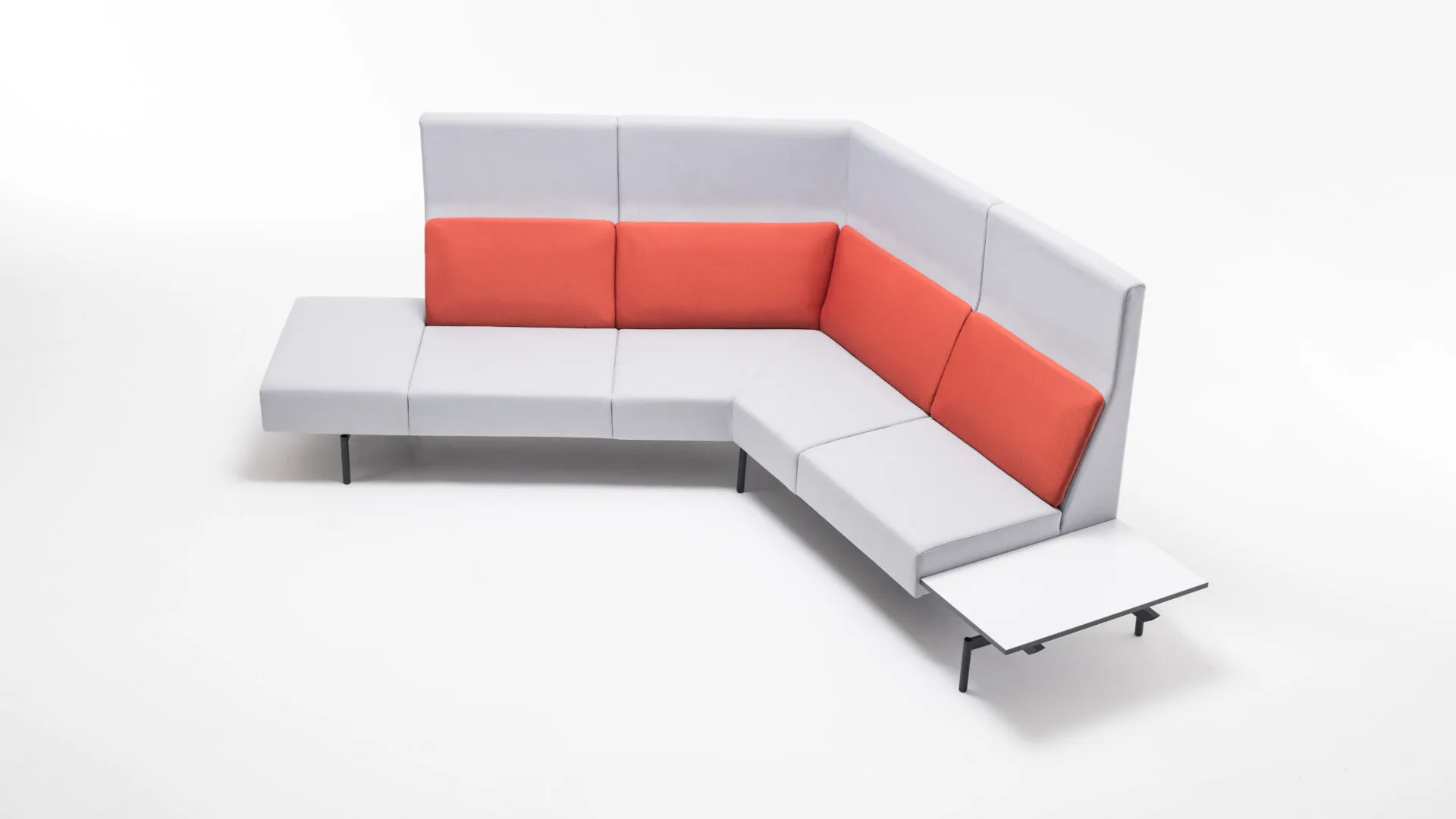
Modular sofas, by contrast, are composed of multiple independent sections (modules) that can be configured in various ways. This offers unparalleled flexibility. You can create a traditional L-shape, a U-shaped conversational pit, or even separate the pieces into individual seating elements. This adaptability is ideal for unconventional room layouts, growing families, or those who enjoy rearranging their living space. Furthermore, moving a modular sofa is significantly easier, as each component can be transported separately.
When evaluating a modular sofa, pay close attention to the connection hardware used to join the sections. High-quality systems, often sourced from manufacturers like Hafele, will provide a secure, rigid connection that prevents the modules from drifting apart during use. The design should ensure that the connections are both strong and discreet, preserving the clean lines of the overall form. The seams between modules should be tight and uniform, a detail that speaks to the precision of the manufacturing process.
Dimensions and Ergonomics: The Geometry of Comfort
Proper ergonomics are essential for a sofa to be truly comfortable, and this is dictated by a few key dimensions. Seat depth—the distance from the front edge of the cushion to the back cushion—is paramount. A standard seat depth ranges from 55 cm to 65 cm. A shallower depth (around 55 cm) encourages a more upright posture and is easier for shorter individuals to get out of, while a deeper seat (65 cm or more) allows for a more relaxed, lounging posture and is often preferred by taller people. It is crucial to test this dimension to ensure your feet can rest comfortably on the floor while your back is supported.
Seat height, the distance from the floor to the top of the seat cushion, typically falls between 40 cm and 45 cm. This height should allow you to sit down and stand up with minimal effort, with your knees at a roughly 90-degree angle. The backrest height and angle also play a significant role. A higher backrest provides more support for the shoulders and neck, while a lower profile creates a more open, contemporary look. The angle of the backrest should provide lumbar support without forcing you into an overly rigid or excessively reclined position.
Finally, consider the overall footprint of the sofa in relation to your room. Before purchasing, use masking tape on the floor to outline the sofa's dimensions. This simple step helps you visualize its scale, ensuring that it doesn't overwhelm the space and that you leave adequate circulation paths (at least 75-90 cm for main walkways). Pay attention to the sofa's total depth and length, not just the seating area, to ensure a harmonious and functional layout.
The Importance of the Workshop: Why You Should Ask Where It's Made
Knowing the origin of your sofa provides insight into its quality and the ethics of its production. When a sofa is made in a local or transparently-managed workshop, it implies a higher level of accountability. You can inquire directly about the specific materials used, the construction techniques employed, and the standards of craftsmanship upheld. This is a stark contrast to mass-produced furniture from anonymous factories, where details about the internal components are often obscured.
A direct relationship with the maker or a knowledgeable atelier allows for customization and better after-sales service. Should you need a replacement cushion cover in five years or a repair to a leg, a local workshop is far more likely to be able to assist you. They maintain knowledge of their products and often have access to the original materials and plans. This extends the life of your furniture and represents a more sustainable approach to consumption.
Furthermore, the production location is linked to material sourcing. An atelier with a reputation to uphold is more likely to source high-quality, certified materials, such as FSC (Forest Stewardship Council) certified wood, which ensures responsible forest management. They are also more likely to use reputable hardware from brands like Blum or Hafele for any moving parts. Asking 'Where is this made?' is not about geography; it's about transparency, quality control, and the long-term serviceability of your investment.
Warranty, Returns, and Spare Parts
A manufacturer's warranty is a statement of confidence in their product's durability. A comprehensive warranty should cover different components for varying lengths of time. The frame, being the structural core, should ideally have the longest warranty, often 5 to 10 years or even a lifetime guarantee against manufacturing defects. The suspension system, foam cushions, and mechanisms (if any) should be covered for a minimum of 2 to 5 years. The upholstery fabric is typically covered for a shorter period, usually 1 to 2 years, against defects like seam slippage.
Before purchasing, clarify the terms of the warranty. Understand what constitutes a manufacturing defect versus normal wear and tear. A reputable company will have a clear and fair policy. Similarly, inquire about the return policy. While custom-made furniture is often non-returnable, there should be clear protocols for addressing any issues or defects that are present upon delivery. A transparent and customer-focused policy is a strong indicator of a trustworthy brand.
Beyond the initial warranty period, the availability of spare parts and services is crucial for long-term ownership. Ask if it's possible to order replacement cushion covers or foam inserts in the future. A sofa's frame can last for decades, but the fabric and foam are subject to wear. The ability to reupholster or replace cushions significantly extends the functional and aesthetic life of the piece, making it a more sustainable and valuable asset.
Frequently Asked Questions
What is a kiln-dried wood frame and why is it important?
A kiln-dried frame is made from hardwood (like beech) that has had its moisture content reduced to a stable level in a controlled heating chamber. This process prevents the wood from warping, cracking, or shrinking over time, ensuring the sofa's structural integrity and longevity.
Is a foam density of 35 kg/m³ sufficient?
Yes, 35 kg/m³ is considered the professional benchmark for high-resilience foam in seat cushions for residential use. It offers a great balance of durable support and comfort, resisting sagging and indentations far better than lower-density foams.
What Martindale value should my sofa fabric have?
For general home use, a fabric with a Martindale value of 20,000-25,000 is sufficient. For a high-traffic main family sofa or homes with pets and children, we recommend a value of 40,000 or higher for enhanced durability.
What is the best fabric for a home with pets?
Tightly woven fabrics with a smooth surface, such as microfiber, canvas, or certain performance velvets, are ideal. These materials are resistant to snagging from claws and are often easier to clean. Look for fabrics with high Martindale scores and stain-resistant finishes.
Should I choose an L-shaped sofa or a standard set?
An L-shaped or sectional sofa is excellent for defining corners, maximizing seating in larger rooms, and creating a relaxed, conversational atmosphere. A standard set (e.g., a 3-seater and an armchair) offers more flexibility in arrangement and can work better in smaller or more formal living spaces.
What is the ideal seat depth for a sofa?
The ideal seat depth depends on your height and preferred posture. A depth of 55-60 cm supports a more upright sitting position, while a depth of 65 cm or more allows for a more relaxed, lounging experience. It's best to test different depths to find what is most comfortable for you.
Is boucle fabric durable?
Boucle's durability depends on its composition and Martindale rating. While its looped texture can be prone to snagging from pet claws or sharp objects, high-quality boucle made from wool or performance synthetics can be quite robust. Always check its Martindale score; a value of 30,000+ is recommended for a durable choice.
Can I change the fabric on my sofa later (reupholstery)?
Yes, a well-made sofa with a solid hardwood frame is an excellent candidate for reupholstery. This process allows you to update the sofa's appearance or replace worn fabric, significantly extending its life. Ateliers like Kavela can often provide this service for the pieces they produce.
Is a 2-year warranty enough for a sofa?
A 2-year warranty is a common standard, but it's important to read the details. Ideally, a quality sofa should have a longer warranty on its frame (5-10 years or more), as this is the core structure. The 2-year period is more typical for cushions and fabric.
An Informed Choice is a Lasting One
Choosing a sofa is a process of balancing aesthetics with material science. By focusing on the three pillars of quality—a kiln-dried hardwood frame, high-density foam, and a durable, high-Martindale fabric—you move beyond superficial styling and invest in a piece of furniture engineered for longevity and comfort. Understanding these technical specifications empowers you to ask the right questions and identify true craftsmanship. At Kavela, our process is built on this transparency. We invite you to bring your knowledge and questions to our Ankara atelier, where we can demonstrate these principles in the custom furniture we build.