




19 August 2026
Library, File Cabinet, and Archive Solutions
The Right Solution for Office Archives: Open Shelf or Cabinet with Doors? Information management in offices is not limited to digitalization. Physical documents,...
The Right Solution for Office Archives: Open Shelf or Cabinet with Doors?
Information management in offices is not limited to digitalization. The systematic storage of physical documents, contracts, and corporate records plays a critical role in terms of both operational efficiency and legal obligations. Especially under KVKK Law No. 6698, personal data retention periods and destruction obligations directly affect the choice of office furniture. A poorly chosen archive system invites data breaches, while a well-planned storage area saves you time during audit processes. So, how do you determine the right library, file cabinet, and archive solution for your needs?
Open Shelf Systems and the Advantage of Quick Access
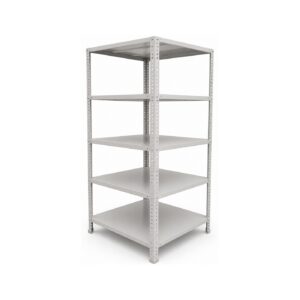
For frequently used files, open shelf systems are undoubtedly one of the most practical solutions. In these systems, where you can visually see everything without the hassle of opening and closing doors, you can reach the folder you are looking for within an average of 3-5 seconds. Especially in project-based teams where multiple people need to access the same document, open shelves accelerate the workflow.
However, dust control is an important issue in open shelf systems. A thin layer of dust can cause papers to yellow and deteriorate over time. Therefore, it is necessary to prefer steel construction models with a shelf depth of at least 40 cm and a sheet thickness of 0.8 mm or more. In addition, adjustable shelf intervals allow you to flexibly place files and folders of different sizes. For example, the Zeta library series offers both aesthetic and functional use with its 80 cm wide modules and shelf heights adjustable at 2.5 cm intervals. In such systems, the load capacity per shelf varies between 60-80 kg; this means that approximately 10-12 standard folders can be safely stored.
Cabinets with Doors and Locks: Privacy and Dust Protection
When it comes to the protection of personal data, cabinets with doors and locks become a necessity. Article 12 of the KVKK imposes an obligation on the data controller to take measures to ensure an appropriate level of security to prevent unlawful access to personal data. In this context, documents that personnel working in human resources, accounting, or legal departments do not have access authorization for must be stored in locked cabinets.
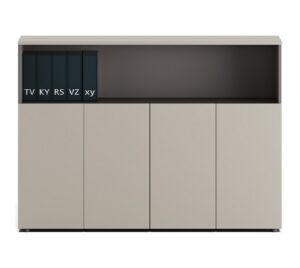
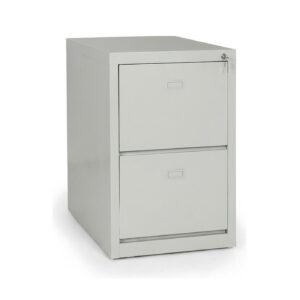
The most important technical detail to consider in cabinets with doors is the closing mechanism of the doors. Soft-close hinges both reduce noise below 30 dB and prevent doors from suddenly closing and causing finger entrapment. In addition, the cabinet body being made of laminate or melamine-coated particle board increases its resistance to moisture. Especially 18 mm thick particle board material maintains its shape for many years without bending under file weights of up to 25 kg. The Brenda file cabinet, with its 3-point central locking system, ensures the security of all drawers with a single key. In this type of cabinet, the carrying capacity per drawer can go up to 40 kg.
Glass Cabinets: A Combination of Prestige and Order
For meeting rooms where guests are received or executive offices, glass cabinets offer both a prestigious appearance and display the order within. The use of tempered glass is of great importance in glass models. Tempered glass is 5-7 times more durable than ordinary glass and, when broken, shatters into small, harmless granules instead of sharp pieces. This prevents serious injuries in the event of a possible accident.
Another advantage of glass cabinets is their contribution to interior lighting. However, it should be noted that glass surfaces require constant cleaning. Fingerprints and dust become much more prominent on glass cabinets. Therefore, if your office does not have regular cleaning staff, it would be more logical to use glass cabinets in display-like sections rather than in heavily used areas. The sliding glass doors on the Daily library unit save space in narrow corridors and compact offices as they do not require extra space for opening and closing.
Compact Archiving Systems (Rail Cabinets): Space Optimization
If you need to store tens of thousands of files in your office, traditional fixed cabinets will be insufficient. At this point, rail-mounted (compact) archiving systems come into play. These systems work on the principle of cabinets moving on rails mounted on the floor. Unused cabinets stand adjacent to each other, while the needed cabinet is accessed by sliding it sideways with the help of a lever or a motorized system.
The biggest advantage of compact archiving systems is that they offer 70-80% more storage capacity in the same area. For example, while you can create 40 cubic meters of archive space with fixed cabinets in a 10 square meter area, this figure can increase to 70 cubic meters with compact systems. However, the flatness and load-bearing capacity of the floor are critically important for the installation of these systems. The floor where the rails will be laid must be able to bear 600-800 kg of load per square meter. In addition, leaving an escape corridor of at least 80 cm between cabinets in rail systems is a legal requirement for fire safety.
Modular Solutions and Ergonomic Approaches
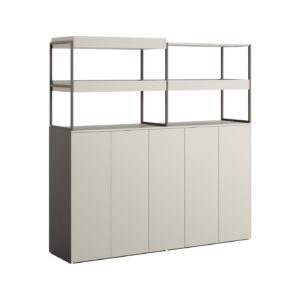
In today’s offices, modular systems are preferred over single-type furniture. Modular systems, which include open shelves, cabinets with doors, and drawer units, can be flexibly reconfigured according to the office’s needs. This way, as the company grows or departments change locations, it is sufficient to simply rearrange the modules instead of completely replacing the furniture.
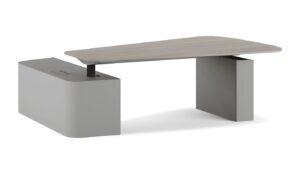
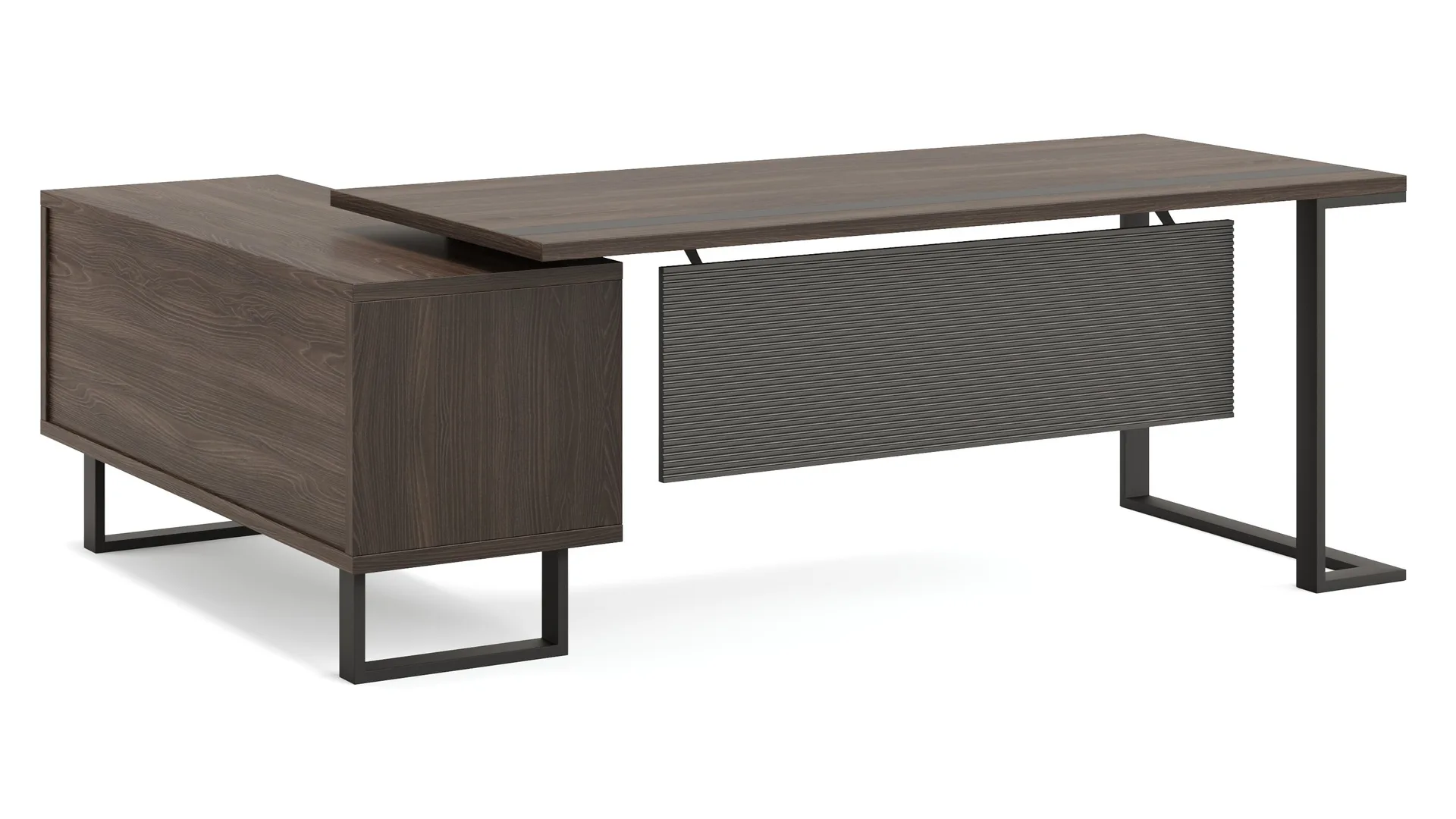
From an ergonomic perspective, it is recommended that frequently used files be placed on shelves at a height of 80-120 cm from the floor. This range is the most suitable area for a person standing to access without bending or reaching. Only rarely used archives should be placed on the upper shelves, and heavy folders on the lower shelves. Side cabinet units integrated with the Okay desk allow access to files without getting up from the desk, thus not interrupting the workflow.
Material and Workmanship Quality in File Cabinet Selection
For a long-lasting archive solution, material quality is of undeniable importance. In metal file cabinets, the steel sheet thickness should be at least 0.7 mm. Thinner sheets can bend under heavy file loads, causing drawers to jam. Electrostatic powder coating is an important detail that protects the surface against scratches and impacts.
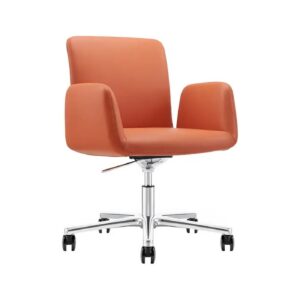
In wood-look laminate cabinets, the surface’s abrasion resistance is determined according to the EN 438 standard. Laminates with an abrasion resistance of at least 300 cycles/minute should be preferred for daily use. Furthermore, the ergonomic design of cabinet handles is important for wrist health in frequently opened and closed drawers. When considered together with ergonomic seating elements like the Duoflex task chair, the drawer opening force of file cabinets should not exceed 30 Newtons; otherwise, it can lead to shoulder and back pain in the long run.
Compact Storage Ideas for Small Offices
Not every office has large storage areas. In small-square-meter offices, vertical space utilization comes to the forefront. Ceiling-high library models utilize the wall surface most efficiently. In such systems, a wheeled ladder or step stool is required to reach materials placed at points higher than 2 meters for access to the upper shelves.
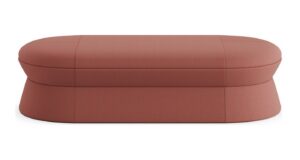
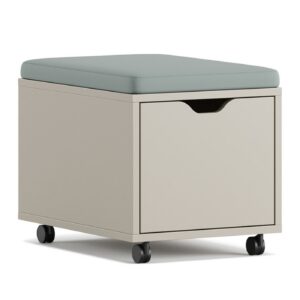
Another practical solution is multi-purpose furniture. For example, designing the underside of a bench used as a seating area as a file drawer simultaneously meets both guest reception and archiving needs. The hidden storage area in the lower section of the Pug sofa unit solves both seating and file storage needs in meeting rooms. This way, you don’t have to allocate space for a separate archive room.
Balance Between Digital and Physical Archives
Although digital transformation is progressing rapidly, physical archiving is still mandatory in many sectors. Especially notarized contracts, court decisions, and official correspondence must be stored in their original forms. Therefore, adopting a hybrid approach is the most appropriate. While frequently used documents are scanned and transferred to digital media, original documents should be physically archived in an organized manner.
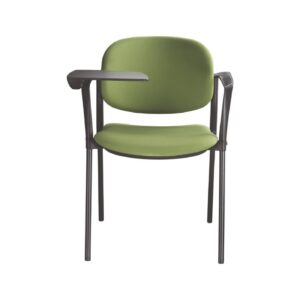
When creating a classification system in a physical archive, attaching numbering labels to file spines and matching these numbers with a digital database significantly shortens search times. Additionally, the humidity level of the archive area should be between 45-55%, and the temperature between 18-22 degrees Celsius. Environments outside these values cause papers to become brittle and ink to fade. With the Cell chair, you can ensure a comfortable sitting position during long-term archive organization work, preventing back and neck pains.
Conclusion
Office archiving systems are not just furniture for storing items; they are the cornerstones of information security, business efficiency, and corporate order. Open shelf systems offer speed and ease of access, while cabinets with doors and locks are indispensable for KVKK compliance. Glass models add prestige, while compact rail systems provide maximum capacity in narrow spaces. When making a choice, first consider your office’s daily access frequency