










1 March 2026
Modern Office Desk Trends: Revamp Your Workspace
The dynamic nature of today's business world has fundamentally changed our perspective on workspaces. An office desk is no longer just a surface where we place our computer; it has become a part of our living space that supports our health, increases our productivity, and meets our aesthetic expectations. In this article, we will delve into the latest modern office desk trends that will transform your workspace both functionally and stylishly. From ergonomics to sustainability, technology to
Quick Answer: Modern office desk trends aim to make workspaces more efficient, healthy, and aesthetic by focusing on ergonomics, sustainability, minimalist design, technology integration, and flexibility. Height-adjustable desks and natural materials stand out.
In today’s professional life, the quality of our workspaces has a direct impact on our productivity and overall health. Especially with the widespread adoption of remote work, the lines between home offices and traditional offices have blurred, making office desk selection more critical than ever. Modern office desk trends encompass not only aesthetics but also fundamental values such as functionality, ergonomics, and sustainability. The bulky and monotonous desks of the past are being replaced by dynamic and smart solutions that adapt to the user’s needs. Revamping your workspace is more than just changing furniture; it’s a strategic step towards improving your work habits and quality of life. In this guide, we will explore step-by-step how you can transform your work environment by discovering current trends. If you are looking for ways to increase your work comfort, you can also check out our ergonomic height-adjustable desk guide.
Ergonomics and Health-Focused Designs: Height-Adjustable Desks
At the forefront of modern office desk trends are undoubtedly ergonomics and health. The health problems caused by sitting at a desk for long hours have increased the popularity of height-adjustable desks. These desks allow the user to switch between sitting and standing positions throughout the day, regulating blood circulation, reducing back and neck pain, and increasing overall energy levels. Models that can be easily adjusted with electric motors offer users a personalized work experience.
When creating an ergonomic workspace, the harmony of the desk with other elements is as important as its height. The use of a standing desk has become an indispensable solution in modern offices to minimize the negative effects of a sedentary lifestyle. These desks offer the ideal working position for each individual thanks to their adjustability according to the user’s height and preference.
[Image: A person working both sitting and standing at a height-adjustable office desk]
Minimalism and Functionality: Stylish and Simple Solutions
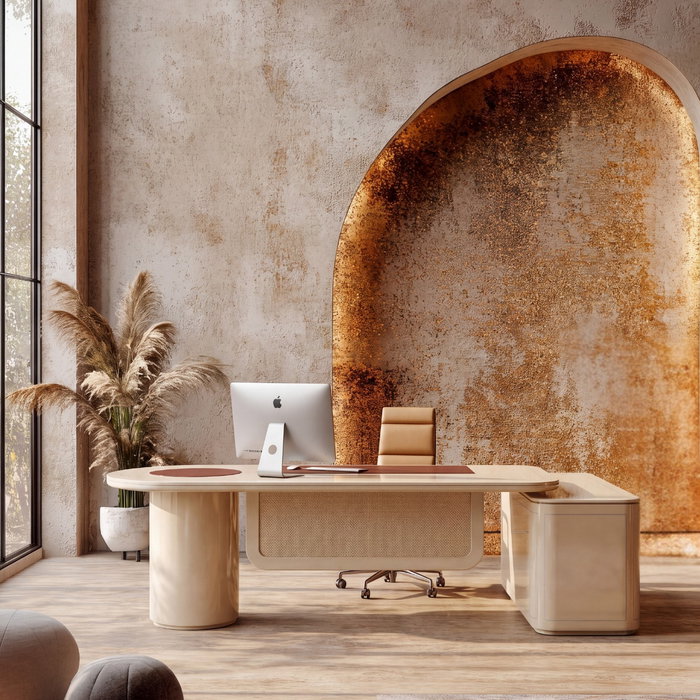
Minimalist design also holds a significant place among modern office desk trends. Fewer items, clean lines, and simple color palettes reduce mental clutter and facilitate focus. Functionality is an inseparable part of minimalist design; every element has a purpose, and unnecessary details are avoided. Hidden cable management systems, integrated drawers, and modular storage solutions are key features of this trend. Keeping the desk surface as clear as possible creates a more spacious and organized workspace.
“A minimalist office desk is not just an aesthetic choice, but also a powerful tool that enhances mental clarity and productivity.”
This design approach is ideal, especially for small home offices. Minimalist desks designed to use space most efficiently create a sense of a large workspace even in limited square meters. Functional details are carefully considered to meet the user’s needs. For example, integrated charging units or concealable storage compartments offer both aesthetic and practical solutions.
Natural Materials and Sustainability: Eco-Friendly Approaches
With increasing environmental awareness, sustainability has become an important part of modern office desk trends. Natural wood, bamboo, recycled metal, and glass offer both aesthetically appealing and eco-friendly options. These materials add warmth, naturalness, and tranquility to the workspace, helping to reduce stress. Furthermore, their durability and longevity eliminate the need for frequent furniture replacement, reducing resource consumption.
The use of natural materials is not just an aesthetic choice but also beneficial for health. While some chemicals found in synthetic materials can negatively affect indoor air quality, natural materials provide a healthier environment. The unique texture and scent of wood add a distinctive character to the workspace.
| Material | Advantages | Disadvantages |
|---|---|---|
| Solid Wood | Durable, aesthetic, natural texture, long-lasting | Heavy, can be expensive, b |