








31 August 2026
Office Furniture Standards Crosswalk 2026: ISO and BIFMA Scopes
A current scope map showing which ISO and BIFMA references apply to desks, seating, storage and hardware.
“ISO/BIFMA compliant” does not identify which performance has been verified for which product. Desks, chairs, storage, panels, hardware and emissions have different references. Some documents specify test methods only; others include acceptance requirements. Without the edition year beside a standard number, a withdrawn document can easily enter a current specification.
This scope map is current to 25 August 2026. It does not reproduce copyrighted test loads or technical content. It uses publicly available titles, scopes and status information to help buyers request the correct evidence.
ISO product-scope map
| Product/topic | Reference | Public scope summary | 2026 status |
|---|---|---|---|
| Tables and desks | ISO 19682:2023 | Structural stability, strength and durability test methods regardless of material or manufacturing method | Published |
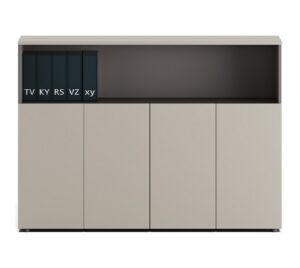
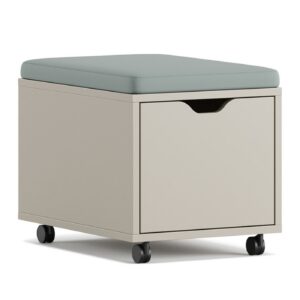
| Storage units | ISO 7170:2021 | Strength, durability and stability tests for fully assembled units and moving/non-moving parts | Published; under systematic review |
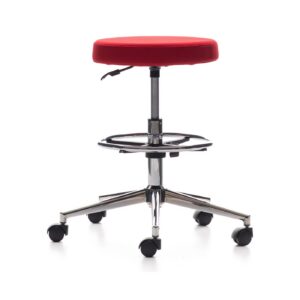
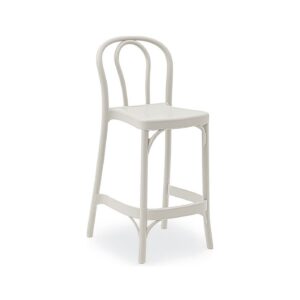
| Chairs and stools | ISO 7173:2023 | Strength and durability of seating structures; upholstery durability excluded | Published; revision planned |
| Seating revision | ISO/DIS 7173 | Draft adding stability to the title and scope | Under development; not a published International Standard |
| Vertical-axis hinges | ISO 4769:2022 | Strength and durability of hinges and components | Published |
| Drawer/extension hardware | ISO 12808:2024 | Strength and durability of extension elements and components | Published |
| Surface abrasion | ISO 4211-5:2021 | Assessment of abrasion resistance for furniture finishes | Published |
| Surface scratching | ISO 4211-6:2025 | Assessment of scratch resistance for furniture finishes | Published |
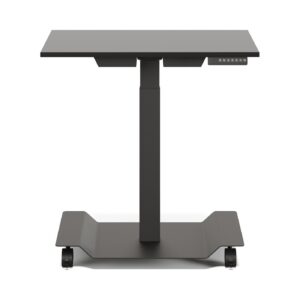
ISO 19682 illustrates an important boundary: it excludes ageing, degradation, flammability and electrical components. A powered sit-stand desk therefore needs separate evidence for structure, motor, cables and electrical conformity. ISO 7170 is also a test-method document that does not itself set acceptance criteria; the project must identify the required performance level in a separate requirements document.
ANSI/BIFMA product-scope map
| Product/topic | Reference | Short scope name |
|---|---|---|
| General-purpose office chairs | ANSI/BIFMA X5.1-2017 (R2022) | Safety and performance for office seating |
| Large-occupant seating | ANSI/BIFMA X5.11 | General-purpose chairs for higher occupant loads |
| Lounge/public seating | ANSI/BIFMA X5.4 | Lounge and public seating products |
| Desks and tables | ANSI/BIFMA X5.5-2021 | Desk and table products |
| Office panel systems | ANSI/BIFMA X5.6 | Panel systems |
| Storage | ANSI/BIFMA X5.9 | Storage units |
| Home office | ANSI/BIFMA X6.5-2022 | Home-office and occasional-use furniture |
| Furniture emissions | ANSI/BIFMA M7.1 and X7.1 | VOC emissions test method and low-emitting standard |
| Ergonomics | ANSI/BIFMA X10.1-2024 | Ergonomic requirements |
| Sustainability | ANSI/BIFMA e3-2024 | Multi-attribute furniture sustainability framework |
For a “BIFMA tested” statement, request the number, year, product configuration and report owner. An X5.1 assessment of a chair does not automatically verify upholstery abrasion or flammability. Component evidence and whole-product structural evidence remain separate.
Are ISO and BIFMA equivalent?
No. References may address similar products while using different scopes, load profiles, conditioning, acceptance criteria and reporting. Substituting BIFMA for ISO, or the reverse, requires a technical comparison by the project owner, competent laboratory and relevant market specialists. Similar titles are not evidence of equivalence.
The minimum language for a specification
Replace “the product shall comply with standards” with the following structure:
- Product: tested model, dimensions, mechanisms and critical materials;
- Reference: standard number and edition year;
- Scope: strength, stability, emissions, ergonomics or surface;
- Evidence: laboratory, report number and date;
- Representation: why the tested sample represents the configuration offered;
- Acceptance: required performance level or certification programme.
Read the scope of a report, not only its cover. A pass belongs to the sample and conditions recorded. Changes in size, leg span, mechanism, panel or joint can affect the result. The manufacturer’s change process should identify which revisions require re-testing.
Annual update rule
The map is not static. ISO 7173:2023 remains published while ISO/DIS 7173, intended to replace it, is under development in 2026. A draft should not be mandated as if it were already an International Standard, but it should be monitored for future tenders. Check every number in bid templates against the official ISO and BIFMA catalogues at least annually.
Conclusion
Correct standards selection is not the longest possible list. It connects each product risk to the right document, states the edition, and links the tested sample to the purchased configuration. Desk structure, electricity, surfaces, emissions and ergonomics are different evidence layers and should not disappear inside one generic compliance sentence.