









22 June 2026
Reception Desk Types: 5 Design Lines According to Corporate Identity
Corporate Identity and Reception Desk Relationship The first piece of furniture a visitor sees and physically interacts with when entering a business is the reception...
Corporate Identity and Reception Desk Relationship
The reception desk is the first piece of furniture a visitor sees and physically interacts with when entering a business. The design at this point is not just an aesthetic choice; it is a tool that directly conveys messages about the brand’s level of professionalism, sectoral stance, and the value it places on customers. For example, 3 mm thick brushed stainless steel used on the front surface of a 180 cm long desk conveys a message of “forward-thinking” for a technology company, while a walnut veneer of the same size in a law firm emphasizes “reliability” and “tradition.” The correct desk selection also affects many operational details, from the acoustics of the space to employee ergonomics.
1. For Law Firms: Traditional and Trust-Inspiring Wood Textures
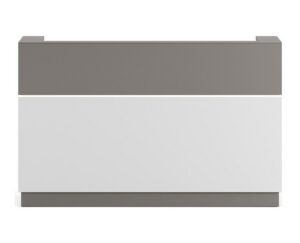
In law firms, the seriousness and sense of trust in the reception area are paramount. In this sector, desks with a depth of generally 70-80 cm, featuring solid wood appearance or real wood veneer, are preferred. Dark walnut or mahogany tones, combined with profiled front panels 40-50 cm high, present a robust stance. For instance, vertical wooden slats used on the front surface of a 160 cm wide desk add rhythm to the space while also contributing to sound insulation. In these types of desks, channel details 2-3 mm deep on the surface or lacquered finishes can be preferred to soften the initial contact between client and lawyer. The simple front panel and clean lines of the Riva Reception Desk model combine this traditional stance with a modern interpretation, supporting the professional image required by law firms.
2. For Clinics and Healthcare Institutions: Hygiene-Focused Minimalist Designs
In the healthcare sector, the primary role of the reception desk is to convey hygiene and order. Therefore, non-porous surfaces and the absence of sharp corners are critically important. In compact desks 120-150 cm wide, 8-10 mm thick tempered glass or antibacterial laminate coatings are used. White, light gray, or pastel tones are preferred. Especially in clinic-type examination rooms, hidden cabling channels and closed storage areas 30-40 cm high at the bottom of the desk accelerate the workflow of the nurse or secretary. The transparent surface of the Reception Glass Desk model enhances the feeling of spaciousness in small areas, while its easy-to-clean structure contributes to the sterile appearance of the clinic environment. If LED lighting is used in these types of desks, the color temperature should be between 4000K-5000K (neutral white) to increase the perceived level of cleanliness in examination room waiting areas.
3. For Technology Companies: Dynamic and Futuristic Metal-Glass Combination
The reception areas of start-up or software companies should reflect the company’s culture of innovation and speed. In this sector, desks are generally designed with widths exceeding 200 cm, in asymmetrical forms, and with industrial materials. Black matte lacquer surfaces, 15 mm thick tempered glass panels, and 2 mm thick steel legs have become standard. Especially to create a focal point in the entrance hall, RGB LED panels integrated behind the desk create a dynamic atmosphere with 16 million color options, according to the company’s corporate color or time of day. The sharp geometric lines and metal accents of the Z2 Reception Desk model create a strong silhouette in front of a technology company’s logo wall. The 7-10 cm deep cabling channels on the rear work surface of these desks ensure that multiple monitors and server connections remain organized.
4. For Hotels and Boutique Accommodation Businesses: Warm Welcome and Luxury Details
In hotel lobbies, the reception desk is the first and most important point of contact for the guest’s accommodation experience. Desks used in these areas are generally designed in large sizes, such as 250-300 cm, with marble or stone-clad front panels. For example, 3 cm thick marble slabs or 60×60 cm ceramic tiles are mounted on the front surface of the desk to provide a luxurious appearance. However, due to the weight of real marble (approximately 20-25 kg per square meter) and its porous structure, boutique hotels often prefer lighter and stain-resistant porcelain coverings. The Daisy reception desk with integrated planter model stands out with its integrated plant pot to create a natural welcoming feel in the hotel lobby. The planter section in this model has a soil capacity of 30 liters and is equipped with a drainage system suitable for indoor use. Hotel desks also feature lower shelves 50-60 cm wide for guests to place their bags and 15-20 cm high stainless steel luggage racks to increase user comfort.
5. For Boutique Stores: Flexible and Display-Oriented Modular Solutions
In the retail sector, the reception desk also functions as a display area and a cashier’s transaction point. Therefore, desks need to be modular and able to adapt to seasonal changes in the store. Systems consisting of 80×80 cm modular square units can be combined into L-shapes or island configurations. The top surface of these units features display compartments 10-15 cm deep or open shelves. This allows for the display of cosmetic products, accessories, or promotional materials. The simple and convertible structure of the Riva Banko model can be used as both a payment point and a product display area in small boutiques. Especially in boutique stores, mirror cladding or lacquered surfaces used on the front of the desk visually enlarge the space, while reflections of products offer a rich shopping experience. The 40 cm high closed cabinets located under these desks provide sufficient storage space for spare stock and stationery.
Conclusion
Choosing a reception desk is the most tangible part of your business’s physical welcoming strategy. A 180 cm walnut desk you choose for a law firm and a 220 cm glass-steel desk you prefer for a technology start-up will create completely opposite perceptions in two different spaces of the same square footage. While hygiene is paramount in clinics, luxury in hotels, and flexibility in stores, ergonomic measurements (working height between 72-76 cm, seating area depth at least 60 cm) and material durability (at least 0.8 mm wear layer on laminate surfaces) expected from the desk are common across all sectors. Making the right choice by blending these factors with your corporate identity will strengthen your professional image and increase customer satisfaction.