












26 August 2026
Furniture Lifespan Reference 2026: 15 Years, 30 Years and Real Service Life
Why one number cannot describe furniture life: a source-led reference separating technical, actual and economic lifetimes.
“How long does furniture last?” invites a single number, but one number often creates false precision. The European Commission’s Joint Research Centre (JRC) separates product life into three concepts: technical lifetime, how long the item can perform; actual lifetime, how long it remains in use; and economic lifetime, how long maintenance remains worthwhile compared with replacement. A desk may still function technically and yet be discarded after a relocation, layout change or repair judged too expensive.
The central finding of this reference is simple: 15 years and 30 years are not competing universal warranties. The JRC preliminary report discusses a potential 30-year life for standard furniture while reporting an average life of 15 years. The life-cycle sources collected in the same report use assumptions ranging from eight to 30 years for different furniture types. Those figures do not prove that every corresponding product will last that long. They document service-life assumptions used in environmental studies and show why product type and context matter.
Service-life figures found in the source literature
| Furniture type | Life used in the source | Correct interpretation |
|---|---|---|
| Furniture in general | 15-year average | A cross-source JRC reference, not a warranty. |
| Standard furniture | 30-year potential | A reference used to explain that discarded furniture can retain technical life. |
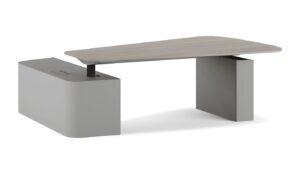
| Office desk or table | 20 or 30 years | Assumptions reported by two separate life-cycle sources. |
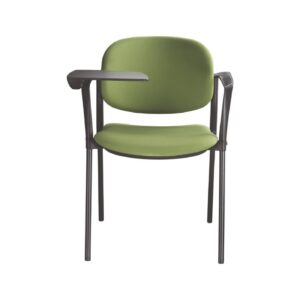
| School desk | 8 years | The service-life assumption in a specific study. |
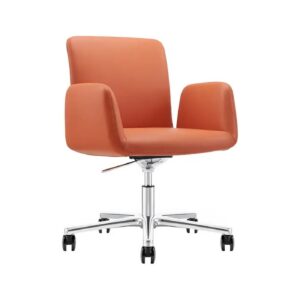
| Office chair | 10–15 years; 30 in another source | Highly sensitive to usage intensity, mechanisms and upholstery renewal. |
| Cabinet | 10 years | A calculation period used in a product category rule. |
A frequently repeated statement such as “ready-made furniture lasts three to five years while custom furniture lasts 30” may describe a design target or a particular experience, but it is not a scientific law for the entire market. A more defensible statement is that repairable products, with replaceable parts and performance verified for their expected loads, can achieve a longer actual life. Kavela’s ready-made versus custom furniture comparison approaches the distinction through structure and adaptability rather than through material labels alone.
Six variables that determine furniture life
- Load and frequency: A task chair used for eight hours every day and a chair in a guest room do not share the same calendar life. User mass, opening cycles, shifts and dynamic impacts need to be specified.
- Load-bearing structure: Panel thickness is not a complete quality measure. Joint geometry, fastener type, edge distance and the load path through the carcass work together.
- Surfaces and upholstery: Fabric, foam, edging or finish may reach the end of its economic life while the frame remains sound. Replaceable wear layers can save the entire product.
- Repairability: The JRC identifies ease of disassembly and availability of spare parts as central repairability factors. Irreversible bonding can turn one small fault into the end of the whole item.
- Adaptability: Replaceable cable modules, doors, legs or worktops let furniture follow a new workflow. Functional obsolescence then need not arrive before mechanical failure.
- Maintenance environment: Humidity, sunlight, cleaning chemistry and an uneven floor all affect service life. Even good materials can fail early when the required care is unknown.
What evidence should support a 30-year claim?
A calendar-life statement cannot be verified from the material name alone. A procurement or specification file should contain at least the following chain of evidence:
- The standard, edition and report for the relevant strength or fatigue test;
- Confirmation that the tested configuration represents the product offered;
- Separate statements for warranty duration and expected service life;
- Availability periods for mechanisms, fittings, panels and upholstery;
- Maintenance, disassembly and reassembly instructions;
- The usage profile behind the estimate, including load, shifts, environment and user count.
The scope of a test standard matters. ISO 19682:2023 specifies methods for the structural stability, strength and durability of tables and desks. It does not assess ageing, degradation, flammability or electrical components. Passing a test under that standard does not by itself prove that a finish will retain its appearance for 30 years or that an embedded power module will operate for the same period.
A better reporting format for lifespan comparisons
Instead of one unexplained “years” cell, compare five fields: design service life, warranty, verified test scope, spare-parts period and refurbishment scenario. A statement such as “15-year design period; five-year warranty; structural test report; mechanisms available for ten years; upholstery designed for replacement in year eight” is more actionable than an unsupported promise that an item “lasts 30 years.”
Extending life also has an environmental context. If one refurbishment prevents a second purchase, manufacturing impacts are spread over more service. Maintenance materials, long-distance spare-parts logistics and energy-using electronics still need to be counted. Component information such as upholstery abrasion performance should therefore be tracked separately from the whole-product life claim.
Conclusion
The most reliable 2026 furniture-lifespan reference is not a slogan, or even a simple range. It is an evidence file that distinguishes technical, actual and economic life. The JRC’s 15-year average reference and 30-year potential can both be cited when their contexts are retained; neither automatically applies to every item. The useful procurement question is not “Will this furniture last 30 years?” but “Under which use profile, verified by which tests and supported by which repair system, will it continue to provide service?”